Selection for examination does not mean the IRS has already decided the business is wrong
Publication 5146 explains that the IRS examines some employment-tax returns to determine whether wages, compensation and taxes were reported accurately. Selection can arise through computer programs, information-return comparisons, compliance projects, or other reliable information. The publication also says selection itself does not mean an error occurred. That is the right mindset for the opening response: take the notice seriously without assuming the conclusion.
Create a case header the day the letter arrives. Record entity name, EIN, tax periods, type of return, examiner or unit, response deadline, and issues named. Preserve the envelope and complete letter. Then freeze routine destruction of records that could matter to the worker class. A controlled start prevents a common problem in small companies where tax, HR and accounts payable answer separate pieces of the same examination without realizing they are building one evidentiary record.
Correspondence and in-person exams require different logistics
Some employment-tax examinations are conducted by mail; others involve an in-person review. Publication 5146 tells taxpayers in a mail examination to send copies rather than originals and to include the business name, EIN and applicable tax periods on pages submitted. In-person examinations can occur at the business, an IRS office, or the office of a qualified representative. The examiner identifies information that must be provided.
For a correspondence exam, build a numbered PDF response package and preserve exactly what was sent. For an in-person exam, prepare an indexed electronic or physical room with the same discipline. Do not give an examiner an uncurated shared-drive link containing privileged, unrelated, or duplicate material. At the same time, do not withhold responsive records. The goal is a complete, traceable production in which every document can be tied to an information request and tax period.
Information-reporting compliance is checked early, so reconcile W-2 and 1099 records first
Publication 5146 notes that examiners verify information-reporting compliance during the initial stages of an employment-tax examination. In a classification case, that means Forms W-2, 1099-NEC and related records can become important before the parties reach a full debate over control factors. This also intersects with Section 530 reporting consistency.
Reconcile the worker population from payroll and accounts payable to filed information returns for the examination periods and the later periods the examiner may review for reporting compliance. Flag missing returns, corrections, duplicate taxpayer IDs and people who moved between systems. Do not wait for the examiner to find the mismatch. A reconciliation gives the business an accurate map of its reporting history and avoids making categorical statements that are contradicted by its own tax files.
Prepare the people who know the work, not only the people who know the tax returns
Worker classification turns on operating facts. The person who signs the tax return may not know who assigned work, whether contractors could reject projects, how rates were negotiated, what equipment was supplied, or how the role changed. Identify the operational witnesses before interviews begin: the manager who supervised the group, the accounts-payable owner, HR or recruiting staff, and anyone who designed the contractor model.
Give each witness a chronology and the relevant records, not a script. Ask them to distinguish what they know personally from what they learned later. If practices differed by office or year, capture that variation. A rehearsed “all contractors set their own hours” statement can collapse when calendars or manager messages show exceptions. Accurate nuance is more useful than uniform language because the IRS classification analysis depends on the actual relationship.
Run Section 530 relief in parallel with the underlying classification issue
Publication 5146 identifies special procedures for worker-classification and Section 530 relief issues. A business should therefore build two tracks: whether the workers were employees under the governing federal standard, and whether Section 530 can relieve the business of employment-tax liability even if the classification goes against it. The relief track requires reporting consistency, substantive consistency and reasonable basis.
Do not postpone Section 530 until the final conference. Missing 1099 history, predecessor treatment and old decision records are easier to investigate while the audit team is already collecting documents. A parallel file also improves settlement decisions because management can see the strength of the merits and relief positions separately rather than reducing the case to one all-or-nothing view.
Examination results can be agreed, protested, or move into worker-classification special procedures
When the IRS proposes changes, Publication 5146 explains the taxpayer’s options and appeal process. Worker-classification cases can also involve the Classification Settlement Program, Section 3509 reduced rates, and a Notice of Employment Tax Determination under IRC Section 7436 when the issue remains unresolved and the statutory conditions are met. The exact path depends on the case posture.
Before signing an agreement form, reconcile the examiner’s worker list, periods, compensation and tax computation to the company’s records. Before protesting, identify disputed facts separately from disputed legal conclusions. A protest is more effective when it shows exactly which finding is wrong and what document or testimony supports the alternative. The examination report should become a line-by-line decision document, not something management accepts or rejects based on the total proposed dollar amount.
Maintain one deadline calendar through Appeals and any later notice
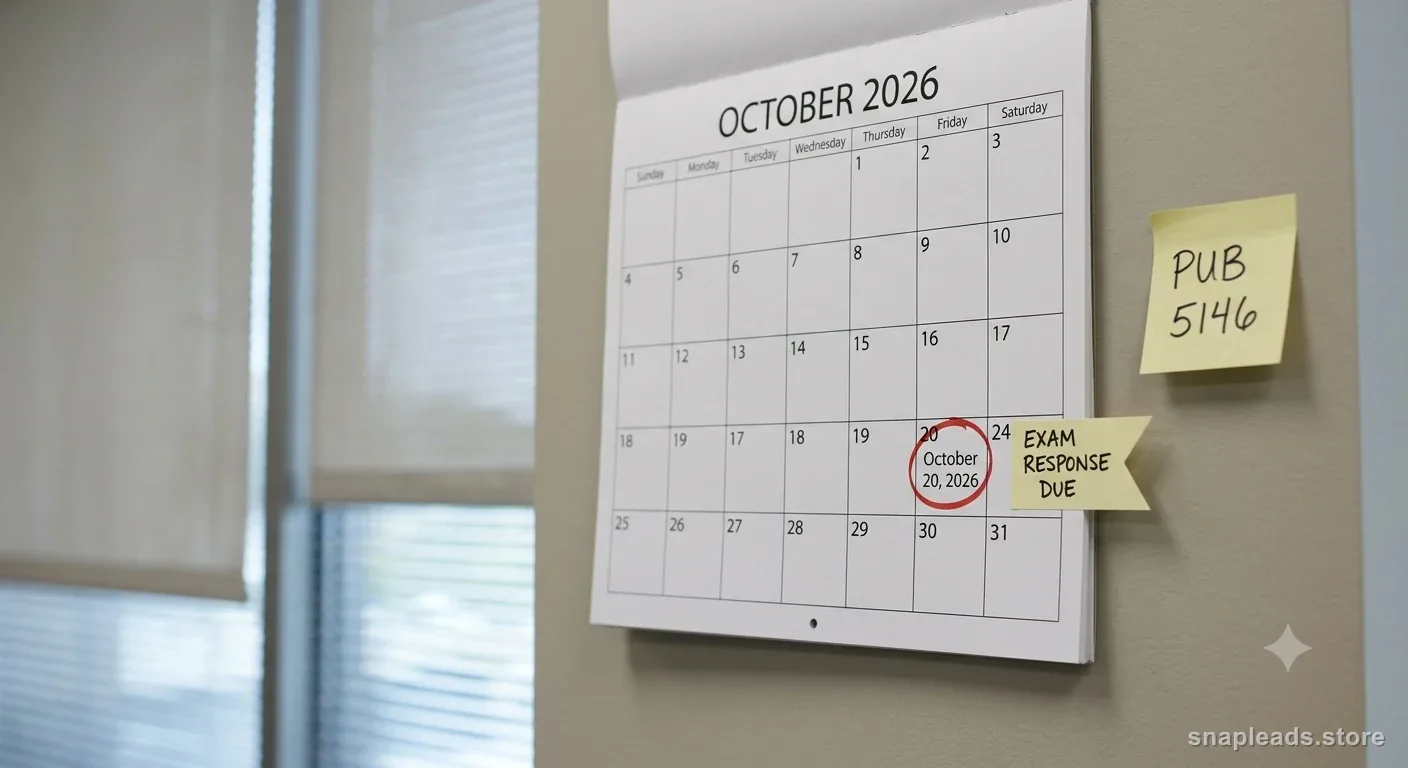
Employment-tax disputes contain several time-sensitive steps. Publication 5146 describes 30-day letters in unagreed cases and special notice procedures for worker classification and Section 530 determinations. The business should not rely on someone remembering these dates from email. Maintain one case calendar with the source document, notice date, response deadline, responsible person, reviewer and submission proof.
Include internal deadlines several days before the agency deadline. If outside counsel or a tax professional is involved, define who has authority to file and who confirms receipt. This administrative discipline is not glamorous, but missing a protest or petition deadline can matter more than the quality of the substantive classification memo. A good audit file protects both the facts and the procedural rights attached to them.
CASE CONTROL
Employment-tax exam timeline board
Use one board for the entire examination so records, people, and deadlines stay synchronized.
| Stage | Owner | File to complete |
|---|---|---|
| Opening notice | Tax lead | Case header, hold notice, issue/period map |
| Initial IDR / mail request | Records lead | Indexed copies, production log, population reconciliation |
| Interviews / fact development | Operations lead | Witness map, role chronology, representative documents |
| Section 530 review | Tax/legal | Three-requirement relief file |
| Examination report | Controller | Worker/period/tax tie-out and disputed-finding list |
| Appeal / notice | Authorized representative | Deadline calendar, protest, proof of filing |
WORKED EXAMPLE
Example: the examiner asks for “all contractor records” across three years
A software company receives an employment-tax examination request covering three years and asking for contractor agreements, payment records and information returns. Different departments begin emailing documents directly to the examiner. The controller stops the fragmented process and creates one production log.
The company reconciles contractor populations by year, labels each document to the request, prepares the operations manager who understands the roles, and opens a separate Section 530 file. The response is still complete, but it is no longer chaotic. When the examiner later asks why two workers moved from W-2 to 1099 treatment, the company can pull the exact chronology instead of searching old inboxes during an interview.