
What is the difference between Form SS-8 and Form 8919?
Form SS-8 and Form 8919 are connected, but they do different jobs. Form SS-8 asks the IRS to determine whether services are performed as an employee or independent contractor for federal employment-tax and income-tax-withholding purposes. Either the worker or the firm may file it, and it is sent separately to the IRS with the facts and supporting documents about the working relationship.
Form 8919 is a tax-return form for the worker. The current form is used to figure and report the worker's share of uncollected Social Security and Medicare tax on compensation when the worker believes the pay should have been treated as wages and one of the form's reason codes applies. It is attached to the worker's Form 1040-series return rather than used as the status-determination request. This is tax education, not individualized filing advice.
SS-8 builds the federal worker-status record
Form SS-8 asks detailed questions about behavioral control, financial control, tools and expenses, work methods, training, helpers, benefits, termination, contracts, and the relationship between the parties. A useful submission is evidence-driven: describe actual schedules, pricing, instructions, invoices, other clients, equipment, and role changes instead of arguing from a 1099 form or contractor label.
Because either side can file, the firm and worker may both be contacted for information. The resulting determination concerns federal employment-tax status under the IRS framework. State unemployment, wage, or workers' compensation agencies can use different tests and are not automatically bound by the SS-8 result.
Form 8919 uses current reason codes A, C, G, and H
The 2025 Form 8919 lists four reason codes. Code A applies when the worker filed Form SS-8 and received a determination letter stating employee status. Code C applies when the worker received other IRS correspondence stating employee status; the form instructions include the section 530 employee situation within that code. Code G applies when the worker filed Form SS-8 and has not yet received a reply, including a worker who believes employee treatment applies and files SS-8 on or before the tax-return filing date.
Code H applies when the same firm issued both Form W-2 and Form 1099-MISC and/or 1099-NEC for the year and the 1099 amount should have been included as wages for employee services. The current form specifically says not to file Form SS-8 when reason code H applies. Always use the Form 8919 for the tax year being filed because reason-code language and line references can change.
When do you file SS-8 before or with Form 8919?
Form SS-8 is never attached to Form 8919 or the income-tax return; the current Form 8919 instructions say it must be filed separately. If reason code G is used, Form SS-8 must be filed on or before the date the worker files Form 8919 with the tax return. The worker does not need to invent a final IRS determination date while the SS-8 is pending.
If code A or C applies, the worker already has the relevant IRS determination or correspondence and records that date on Form 8919 as instructed. If code H applies, the form says not to file SS-8. The right sequence therefore comes from the current reason code, not from a blanket rule that 'everyone must wait for SS-8 before filing taxes.'
Section 530 can make the employer and worker outcomes look different
Section 530 relief demonstrates why the two forms should not be treated as interchangeable. IRS guidance explains that Section 530 can relieve the service recipient from specified federal employment-tax liability without determining the worker to be an independent contractor. The worker can still be determined to be an employee and may use Form 8919 for the employee share of FICA when the filing conditions are met.
That is also why code C matters. The Form 8919 instructions explain the section 530 employee concept when the IRS has determined employee status but granted the employer Section 530 relief. The employer's relief and the worker's status are separate federal tax consequences.
Keep the forms consistent but do not duplicate their purpose
If both SS-8 and Form 8919 are involved, use one compensation reconciliation and one factual chronology. The amount reported on Form 8919 should reconcile to the pay records, Forms 1099 or W-2, and the services described in the status file. The SS-8 evidence should explain the relationship; Form 8919 should perform the tax calculation required by its instructions.
Do not send a duplicate SS-8 as an attachment to the tax return, and do not use Form 8919 as a substitute for describing the classification facts. Preserve filing proof, IRS correspondence, the reason code used, tax forms, and payment records together so a later reviewer can understand the sequence.
For the 2025 Form 8919, the wage total on line 6 is also reported as wages on the individual return under the current instructions, and the form computes the employee Social Security and Medicare tax due on the compensation. Those line references can change in future versions, so the article should point readers back to the form for the tax year rather than turning a 2025 line number into permanent guidance.
A pending SS-8 also does not guarantee that the IRS will agree with the worker. Current Form 8919 cautions that using reason code G is not a guarantee of employee status. Keep enough cash available for a possible tax adjustment and preserve the determination correspondence because a later status result can affect the worker's tax treatment.
Form comparison
SS-8 and Form 8919 side by side
The forms may be connected in one worker's case, but they answer different questions.
| Question | Form SS-8 | Form 8919 |
|---|---|---|
| Primary purpose | Request IRS worker-status determination | Calculate/report employee-side uncollected FICA |
| Who files | Worker or firm | Worker |
| Where filed | Separately with IRS | Attached to worker's income-tax return |
| Reason codes | None | Current 2025 codes A, C, G, H |
| Code G | Must be filed on/before Form 8919 filing date | Used while SS-8 determination is pending |
| Code H | Current form says do not file SS-8 | W-2 + 1099 same-firm same-employee-services situation |
WORKED EXAMPLE
Worked example: worker files code G while SS-8 is pending
A project coordinator receives a $52,000 Form 1099-NEC for 2025 and believes the firm's scheduling, supervision, tools, and continuing relationship made the services employee wages. No IRS determination has been issued. The worker prepares Form SS-8 with the contract, schedules, payment records, and examples of manager instructions.
Before filing the 2025 income-tax return, the worker confirms that current Form 8919 code G applies to the pending SS-8 situation and files SS-8 on or before the tax-return filing date. Form 8919 is attached to the return to calculate the worker-side Social Security and Medicare tax; the SS-8 itself is mailed or submitted separately under its instructions.
COMMON QUESTIONS
Frequently asked
- Do I need to file Form SS-8 before Form 8919?
- It depends on the reason code. Current code G requires Form SS-8 to be filed on or before the date Form 8919 is filed with the tax return.
- Can I attach Form SS-8 to my tax return?
- No. Current Form 8919 instructions say Form SS-8 must be filed separately.
- Do I file SS-8 if reason code H applies?
- The current Form 8919 says not to file Form SS-8 when code H applies.
- What if I have not filed SS-8 yet and think I was misclassified?
- Review the current Form 8919 reason-code instructions and the SS-8 filing requirements before filing the return. Worker reporting path after 1099 misclassification
- What documents should support Form SS-8?
- Use representative records showing the real working relationship, such as contracts, schedules, instructions, invoices, pricing, tools, and other-client evidence. Documents to attach to Form SS-8
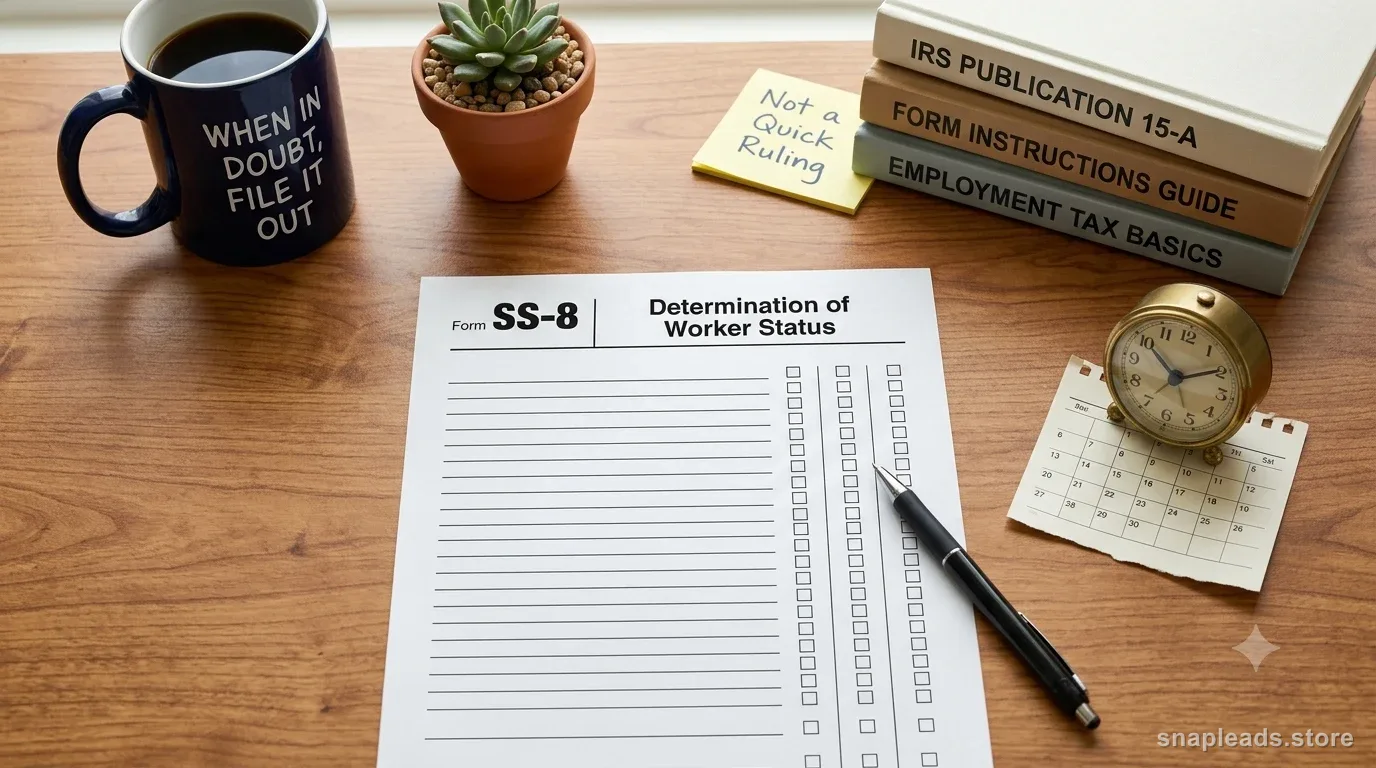 When Should a Small Business File Form SS-8?
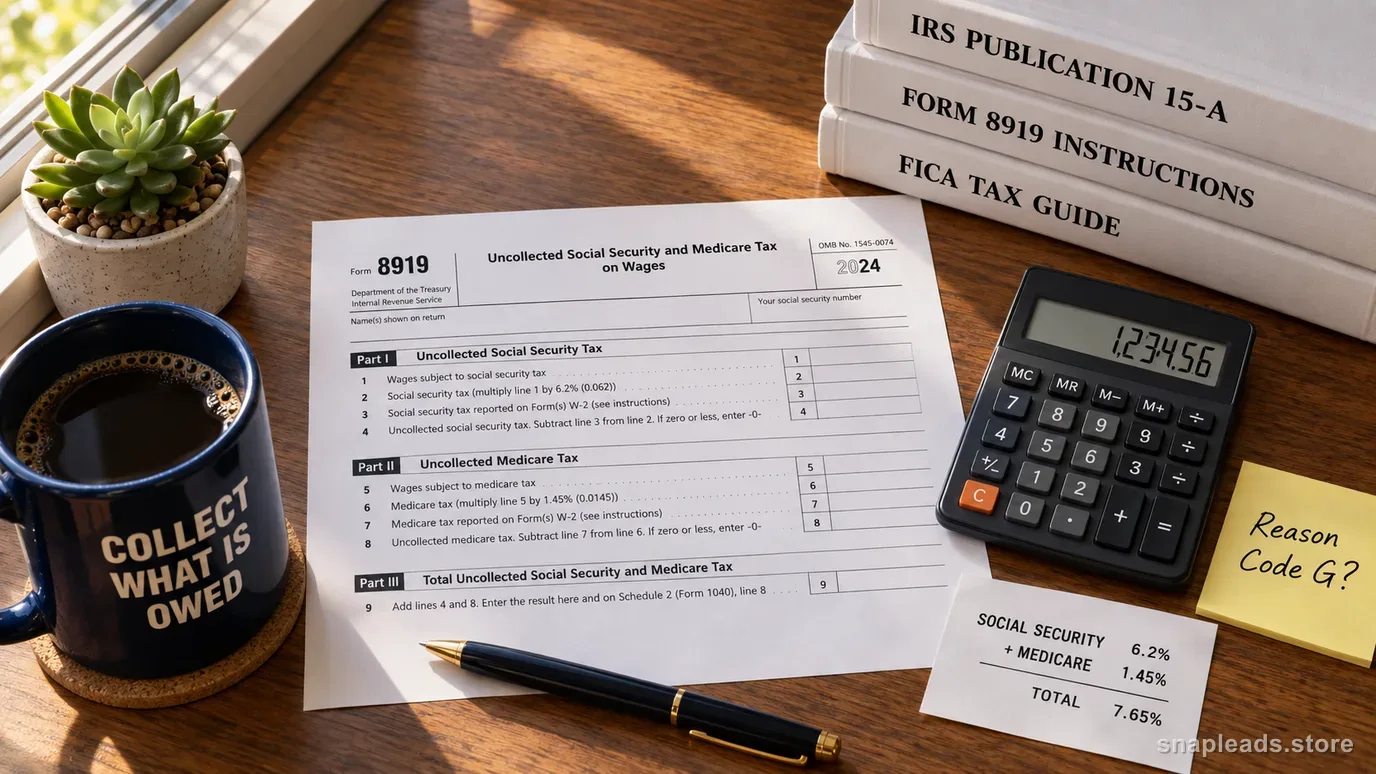 Form 8919: Uncollected Social Security and Medicare Tax
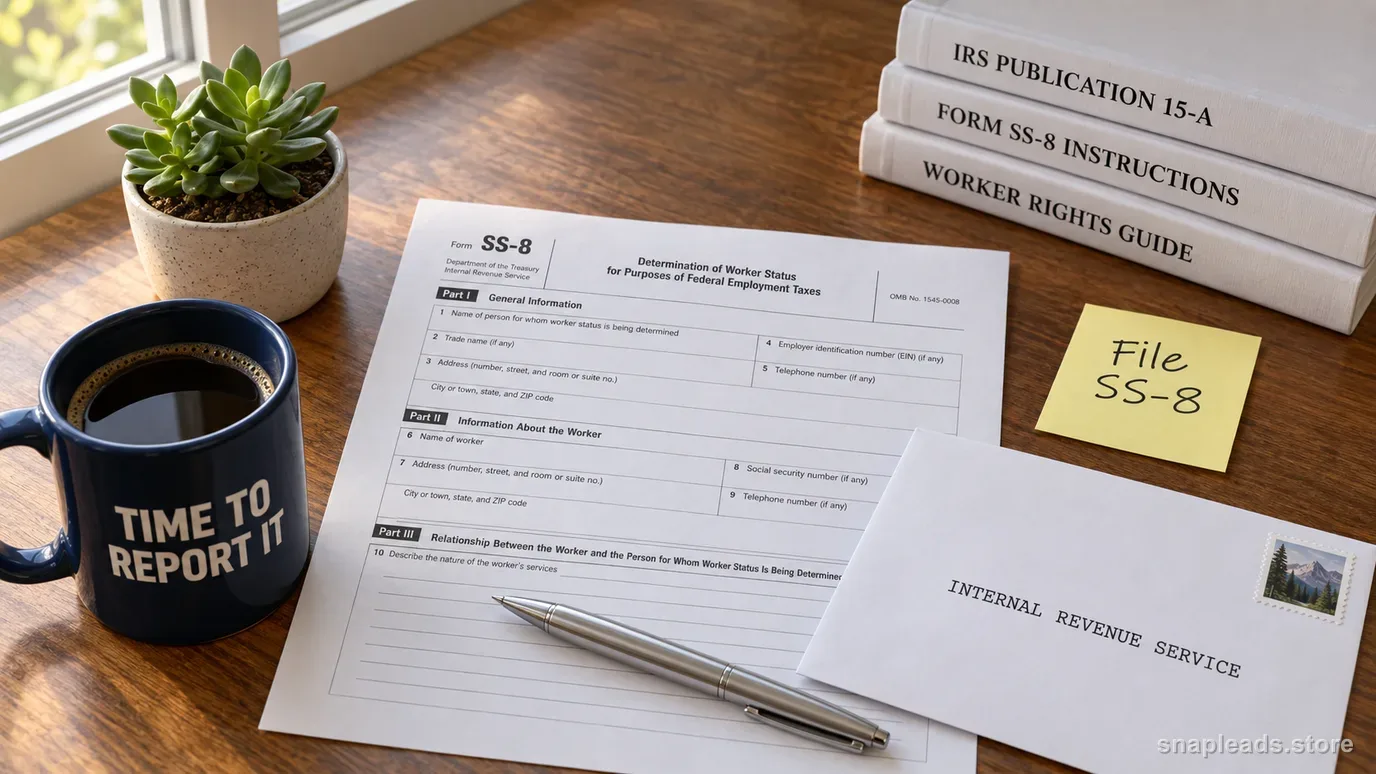 Misclassified as 1099? How to Report It to the IRS
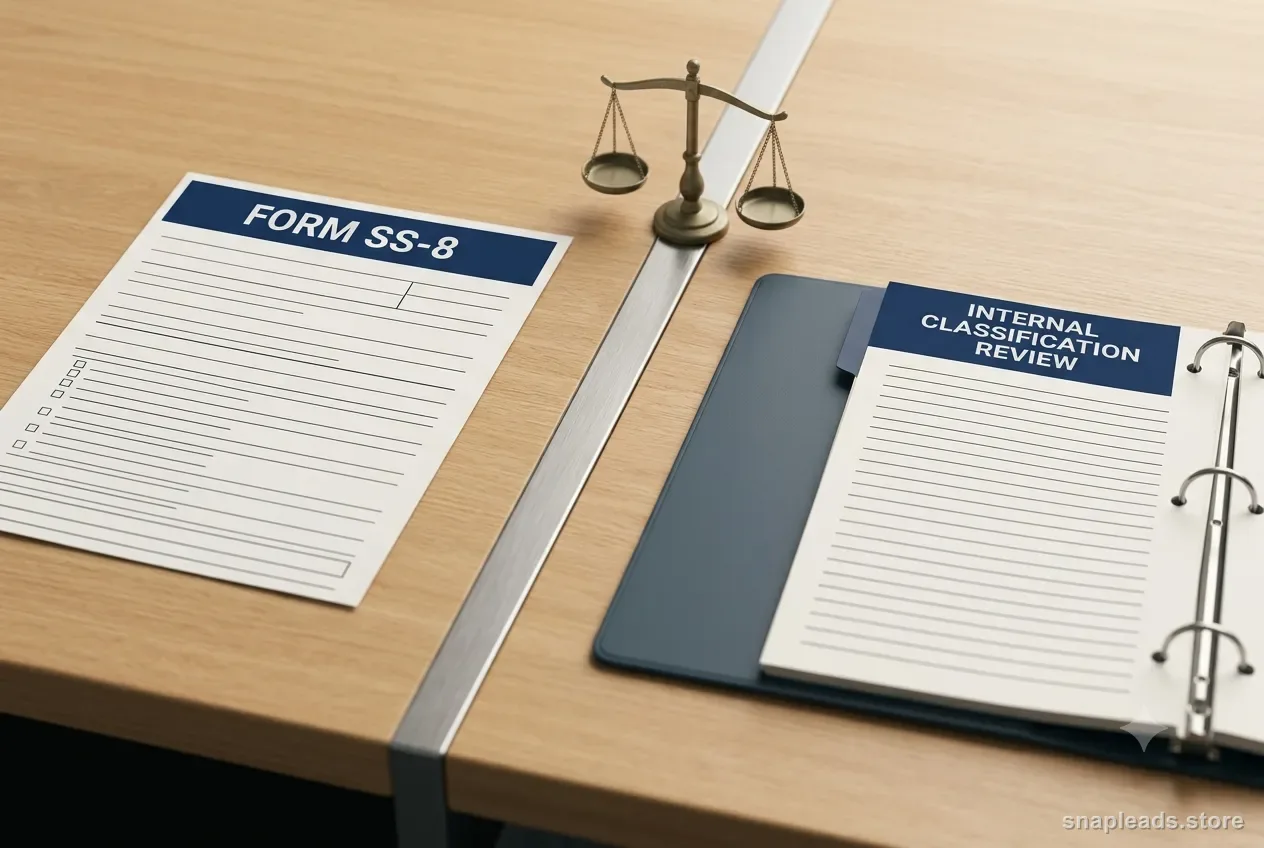 Form SS-8 vs. an Internal Worker-Classification Review: Which One Does What?
 How Long Does an SS-8 Worker-Status Determination Take?
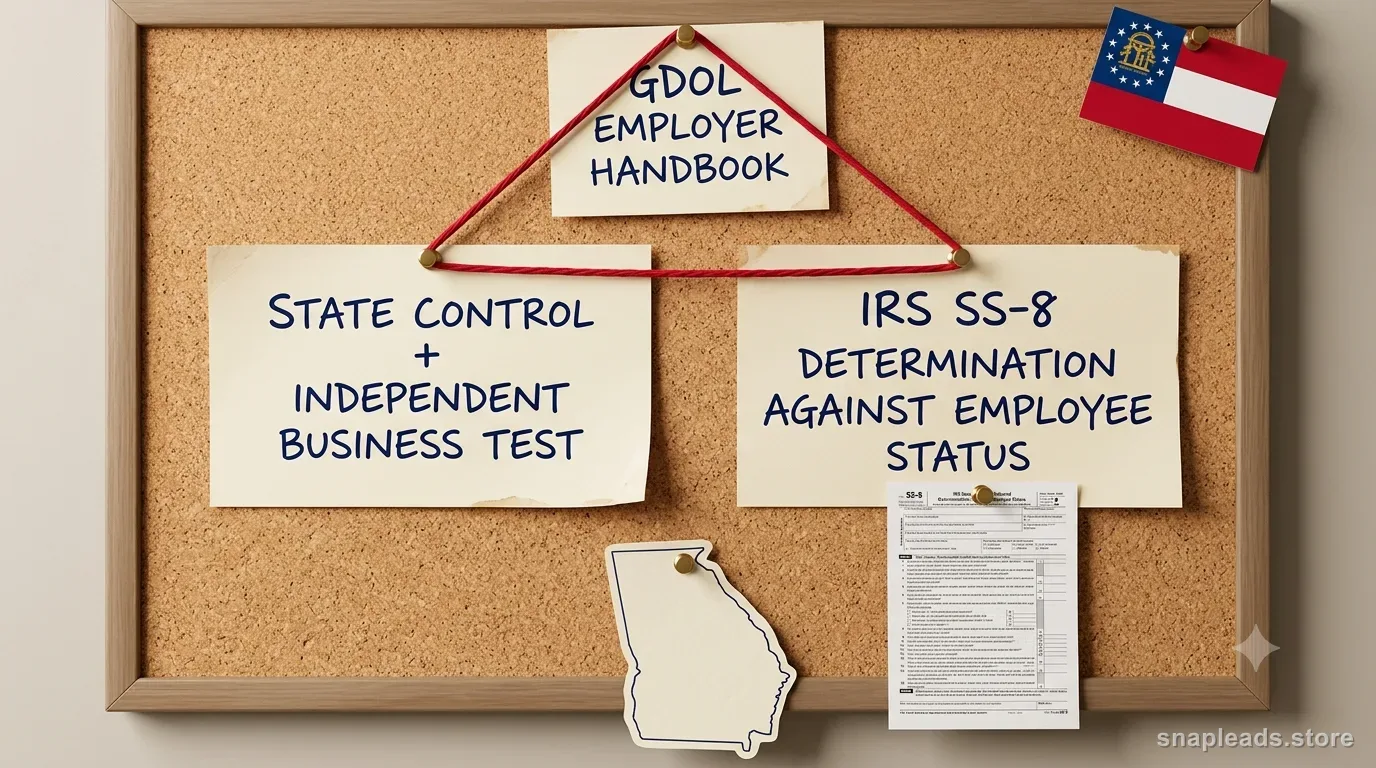 Georgia Unemployment Tax Classification: The Unusual SS-8 Alternative in the GDOL Employer Handbook