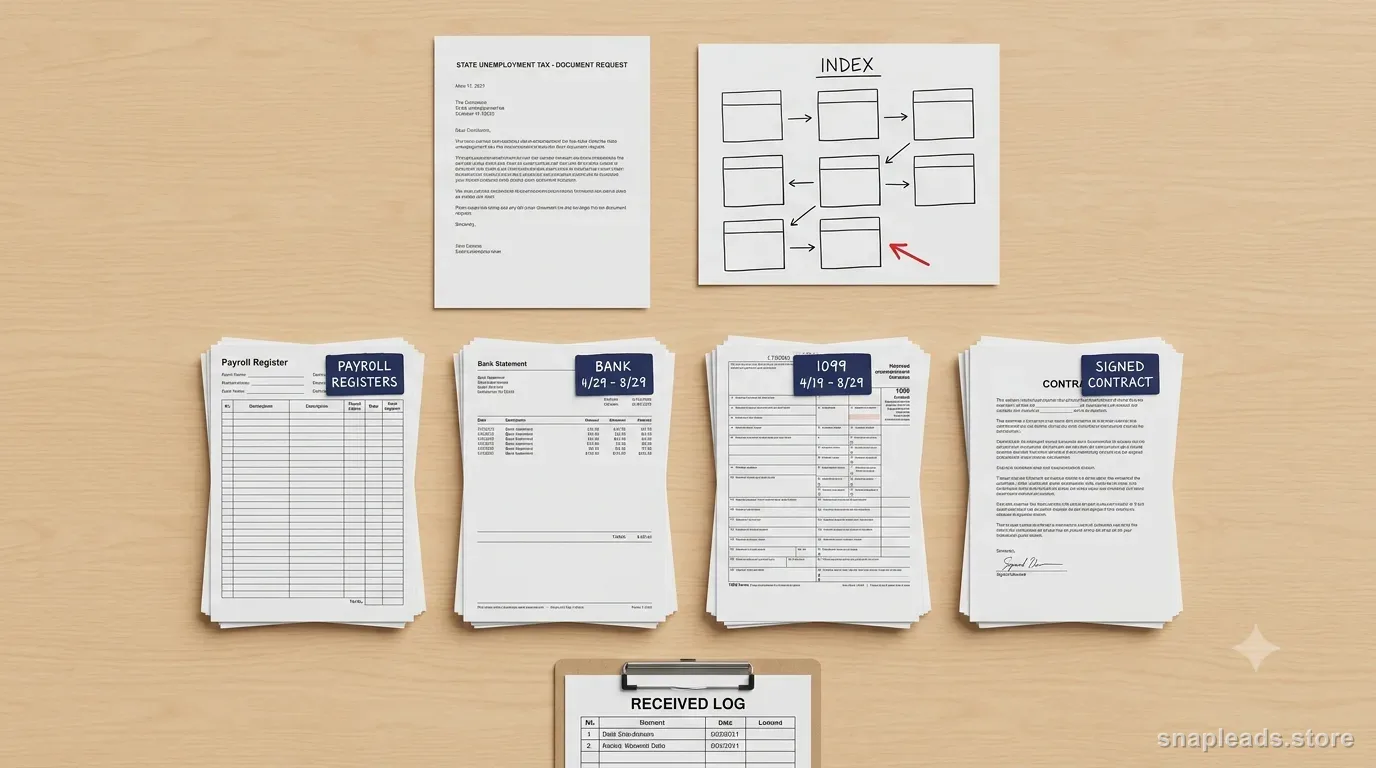
Translate the request into a production list
Start by copying every requested item into a table rather than working from the letter in real time. Give each request a number, responsible owner, source system, date range, status, and production filename. A line asking for ‘all payments to persons not on payroll’ may require data from accounts payable, bank records, and payment platforms; a line asking for contracts may belong to operations or procurement. The table exposes those dependencies before the deadline becomes urgent.
Keep the agency’s wording in the first column. It is easy for a team to narrow a request accidentally while paraphrasing it. If the notice asks for quarterly payroll reports and Forms 1099, do not mark the request complete because a general ledger was exported. The ledger may help, but it is not the same record. If an item does not exist, flag it for an explanatory response rather than inventing a substitute document that could be mistaken for the original.
Preserve the raw exports before cleaning them
Create a read-only folder for source files exactly as exported. Then make a working copy for sorting, redaction decisions, and indexing. This prevents a common problem: someone filters a spreadsheet, deletes columns thought to be irrelevant, and later cannot reconstruct what the system originally showed. File names should include the source, period, and export date. Avoid labels such as FINAL2 or new-new that become meaningless during a longer review.
The same preservation rule applies to email and chat samples. If a manager’s instructions are relevant to direction or control, save enough surrounding context to show who wrote the message and when. A screenshot cropped to one favorable sentence is weaker than a properly dated export or a complete thread. The goal is not to create the largest possible production. It is to maintain a reliable chain from business record to audit response.
Separate worker populations before assembling contracts
A request for contractor agreements does not mean every nonemployee payee belongs in the same folder. Divide payees by what they actually did. A corporation that repaired the roof, an advertising agency with ten employees, an individual home-care aide, and a freelance bookkeeper may all have received nonpayroll payments, but their status questions differ sharply. Grouping by role and operating model helps the company avoid treating a vendor population as if it were one homogeneous workforce.
For each group, create a short cover sheet: number of payees, service dates, how work was assigned, payment method, major tools or investment, whether work could be refused, and whether the business had a manager directing day-to-day activity. That cover sheet is not a legal conclusion. It is a navigation aid that lets an internal reviewer see whether the documents actually support the description being given to the agency.
Reconcile 1099 forms to the payment ledger
Auditors often compare information returns with underlying payment records. Reconcile totals before production so you understand differences yourself. Timing, reimbursements, payments to entities, threshold rules, voided checks, or corrected information returns can create mismatches. A reconciliation schedule should state the source of each number and explain material differences. Do not alter the ledger to force it to match a Form 1099 that was prepared incorrectly.
If you discover a reporting error, keep the classification question distinct from the information-return question. Correcting a name, taxpayer identification number, or amount does not itself determine whether the underlying service provider was an employee. Likewise, a perfectly filed Form 1099 does not prove contractor status. Separate issue logs prevent one administrative correction from being presented as the answer to another legal question.
Use an index so the response can be audited later
Number every file in the production set and create an index with document description, date range, worker group, request number, and any confidentiality note. If the agency accepts a portal upload, save the upload confirmation and the exact folder or archive that was transmitted. If documents are sent by another method, preserve delivery evidence. Months later, this record may be more valuable than anyone’s memory of what was discussed on a call.
The index also limits accidental overproduction. Before sending, compare the planned files against each request row. Ask whether personal data unrelated to the audit is included, whether a file contains another customer’s information, or whether a spreadsheet has hidden tabs. Handle redaction according to applicable requirements and agency instructions rather than improvising. A controlled production is easier for both the examiner and the employer to navigate.
Prepare for follow-up questions, not just the first deadline
A document request is usually the beginning of the factual exchange. Once an examiner sees schedules, contracts, or payment patterns, follow-up questions may focus on one role or period. Keep the working folder alive after the first production. Add a correspondence log, notes of calls, new requests, and the company’s responses. Date each factual memo instead of rewriting the original silently when new information appears.
This is also the time to identify people with direct knowledge. The bookkeeper may know how payments were coded but not who controlled the work. A project manager may know daily practice but not why a contract was signed. Interview notes should distinguish firsthand facts from assumptions. If an examiner requests an interview, the company is then prepared to involve the person who can accurately describe the arrangement rather than the person who happens to be available.
Close the production with a factual cover note
A short cover note can tell the examiner what is included, which request numbers are satisfied, and what remains outstanding. Keep it factual. If a requested item does not exist, state that plainly and explain what alternative record is being provided, if any. Avoid turning a transmittal letter into an unreviewed legal brief. Arguments about the governing test belong in a deliberate response, not in a rushed upload note.
After submission, lock a copy of the sent package. That archive should contain the cover note, index, produced files, upload receipt, and deadline calendar. If the agency later says a document was missing or if a second reviewer takes over, the business can compare against an exact record. Good audit administration cannot decide classification, but it prevents avoidable confusion from becoming part of the dispute.
WORKED EXAMPLE
Example: a request covering three years of nonpayroll labor
A design-build firm receives a request for contractor payments, contracts, payroll reports, bank statements, and general-ledger detail for twelve quarters. The controller initially plans to export every vendor transaction into one spreadsheet.
Instead, the firm preserves the raw ledger, creates a role-based payee inventory, reconciles Forms 1099 to payment totals, and links each file to the agency’s numbered requests. The response package is smaller than the raw data dump but much easier to verify, and the company retains an exact copy of what was produced.