
How far back does a state unemployment audit go?
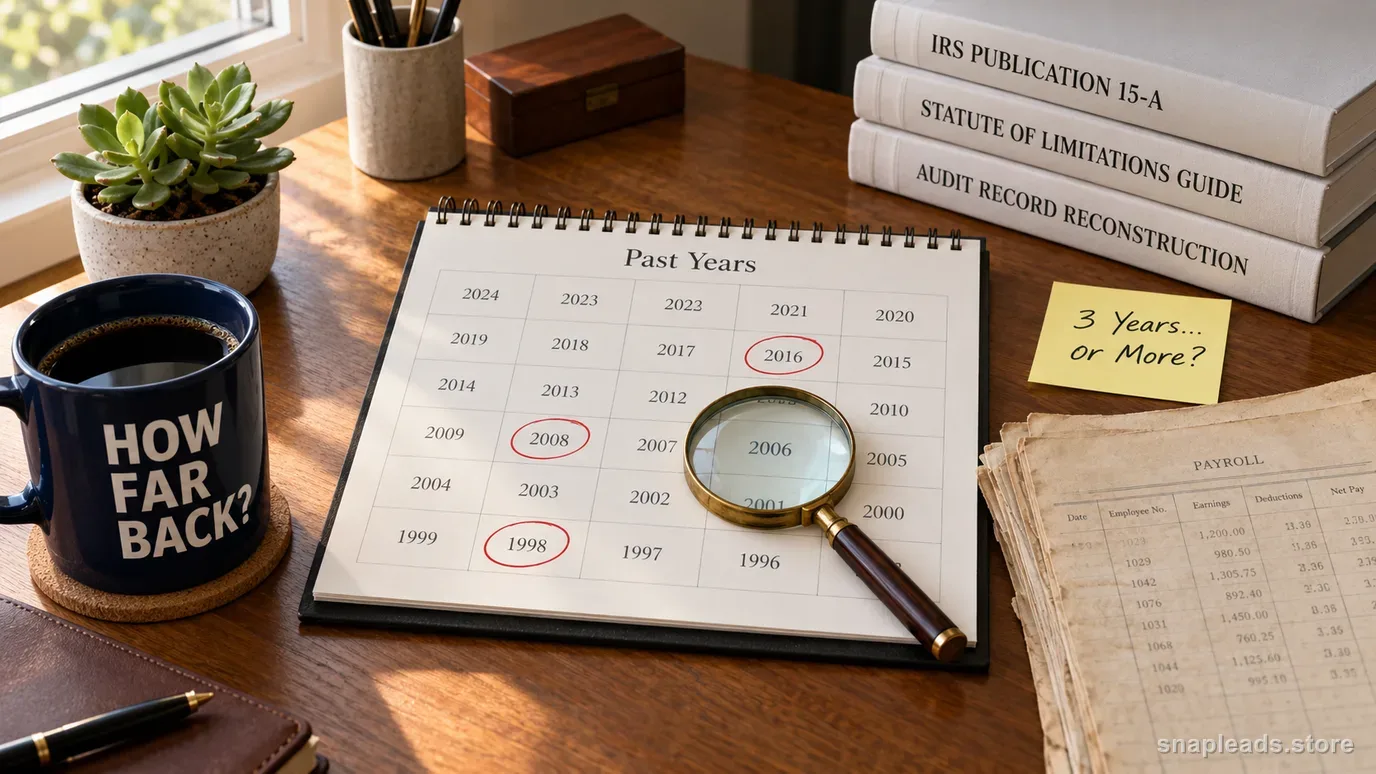
There is no single national lookback period for state unemployment tax audits. Each state controls its own audit scope, assessment statute, exceptions, and recordkeeping rules. Those concepts are related but not interchangeable. An audit notice may request a defined period, a statute may limit when the agency can assess tax, and a separate rule may require records to be retained longer than the ordinary assessment window.
That distinction is important because many search results collapse everything into a statement such as 'unemployment audits go back three to four years.' A better answer is to identify the state, read the audit notice, find the state's assessment limitation, identify any extension or evasion exception, and separately check record-retention duties. This is employer education, not legal or tax advice.
California: generally 12 completed quarters, but the audit can expand
California's EDD says its employment-tax audits generally cover a three-year statutory period consisting of the 12 most recently completed calendar quarters. The audit usually begins with a test year, often the most recent completed calendar year. DE 231TA also says the examination can expand to the entire audit period and, in some situations, can extend beyond the three-year statutory period.
That means the employer should not assume the auditor is limited to the single test year first requested. Build records for the full period stated on the audit notice and preserve older records that may explain worker history, business changes, or a claimed exception. If the examiner seeks periods outside the ordinary published window, ask which statutory or procedural basis applies rather than arguing from a generic internet timeline.
Texas: the assessment limitation and four-year record rule are different
Texas provides a good example of why two different numbers can both be correct. Texas Unemployment Compensation Act section 213.033 generally says the commission may not make an assessment to collect a contribution, penalty, or interest after the third anniversary of the contribution's due date, subject to statutory suspension and exceptions. The same statute addresses willful evasion separately.
Texas Workforce Commission employer guidance also says unemployment-compensation records should be kept at least four years. That four-year retention period is not proof that every Texas audit automatically assesses four years. It tells the employer how long specified records must remain available. A compliance calendar should have one column for assessment limitations and a separate column for retention.
A benefit claim can make an older quarter relevant without defining the tax lookback
Unemployment claims use base periods and wage histories that may cause the agency to ask about prior quarters. That request does not itself answer the assessment-limitations question. A worker's benefit claim can surface missing wage reporting or worker-status questions, and the tax unit may then apply the state's audit and assessment rules to the employer account.
Keep benefit-claim chronology separate from tax-assessment chronology. Record the worker's service dates, the claim date, base-period quarters where relevant, the tax returns for those quarters, and the periods the auditor formally places under examination. That prevents the company from confusing benefit eligibility facts with the tax periods the agency can assess.
What can extend or complicate the ordinary period?
State statutes can contain special rules for failures to file, false or fraudulent reporting, willful attempts to evade tax, pending hearings, bankruptcy, or other circumstances. The wording differs by state, so do not import a federal employment-tax exception into a state UI audit. The relevant question is not 'does fraud mean eight years everywhere?' but 'what does this state's statute say for this notice and period?'
If the agency asserts an extended period, preserve the exact notice and ask for the legal basis. Build an issue log identifying ordinary open quarters, disputed extended quarters, the asserted exception, and the records available for each period. That makes the limitations issue reviewable without mixing it into the merits of worker classification.
Build a state-by-state lookback calendar before an audit arrives
For every state where the company has workers, keep a compliance row showing unemployment-tax agency, ordinary assessment rule, important exceptions, payroll-record retention, contractor-record retention if different, and the official source reviewed. Recheck the row annually because statutes and agency guidance can change. A multistate company should not adopt the longest number it sees online and call that its legal analysis.
Operationally, retaining records longer than the minimum can be prudent when worker relationships span years, Section 530 or federal consistency evidence matters, or litigation is pending. But a business retention decision should not be described as the state's audit statute. Label each number accurately so a future audit team knows whether it is a legal deadline, a required retention period, or an internal policy.
When an audit actually opens, reconcile the legal calendar to the agency's requested quarters. Use one column for the quarter, one for the return or contribution due date, one for any assessment-expiration date identified from official law, and one for whether the quarter is requested only as background. That structure makes it possible to challenge an extended period without withholding records that are legitimately relevant to worker history or a stated statutory exception.
Also preserve proof of when returns were filed and when any administrative hearing, bankruptcy, amended filing, or other event occurred if the state's statute says such events affect the limitations clock. A bare spreadsheet showing '2023 closed' is not enough; the audit file should show the source and calculation behind that conclusion.
Lookback map
Do not mix audit scope, assessment limits, and retention
Build this table separately for every state where workers perform services.
| Concept | What it answers | California example | Texas example |
|---|---|---|---|
| Audit scope | What period the examiner is reviewing | Generally 12 completed quarters; can expand | Defined by TWC audit assignment and records requested |
| Assessment limitation | How long the agency generally has to assess | State statutory rules and exceptions apply | Generally three years after contribution due date, subject to exceptions |
| Record retention | How long records must be kept | Check current EDD employer guidance | At least four years for unemployment-tax records |
| Extended period | Why older quarters may remain open or relevant | Specific statutory/audit circumstances | Willful evasion and statutory suspensions can change the analysis |
WORKED EXAMPLE
Worked example: California and Texas workers in one company
A software company receives a California EDD audit notice in September 2026 covering 12 completed quarters. The controller sees online advice saying to keep 'four years' and assumes the audit should also cover four years. Instead, the company uses DE 231TA for California's ordinary audit scope and keeps the record-retention question separate.
The same company has contractors in Texas. Its Texas compliance file records the general three-year assessment limitation in Chapter 213 and the four-year unemployment-tax recordkeeping rule as two separate lines. When either state asks for older records, the company can identify whether the request concerns background evidence, a statutory exception, or an assessable tax period.
COMMON QUESTIONS
Frequently asked
- Do all state unemployment audits go back three years?
- No. States set their own audit and assessment rules, and exceptions can apply. Use the official rule for the state and the period stated on the notice.
- Does a four-year recordkeeping rule mean the state can assess four years?
- Not necessarily. Record retention and assessment limitations are different legal concepts.
- Can California EDD go beyond three years?
- EDD's published audit process says audits generally cover 12 completed quarters but can extend beyond the three-year statutory period in some situations. California EDD worker-classification audit
- What records should I preserve while I determine the open period?
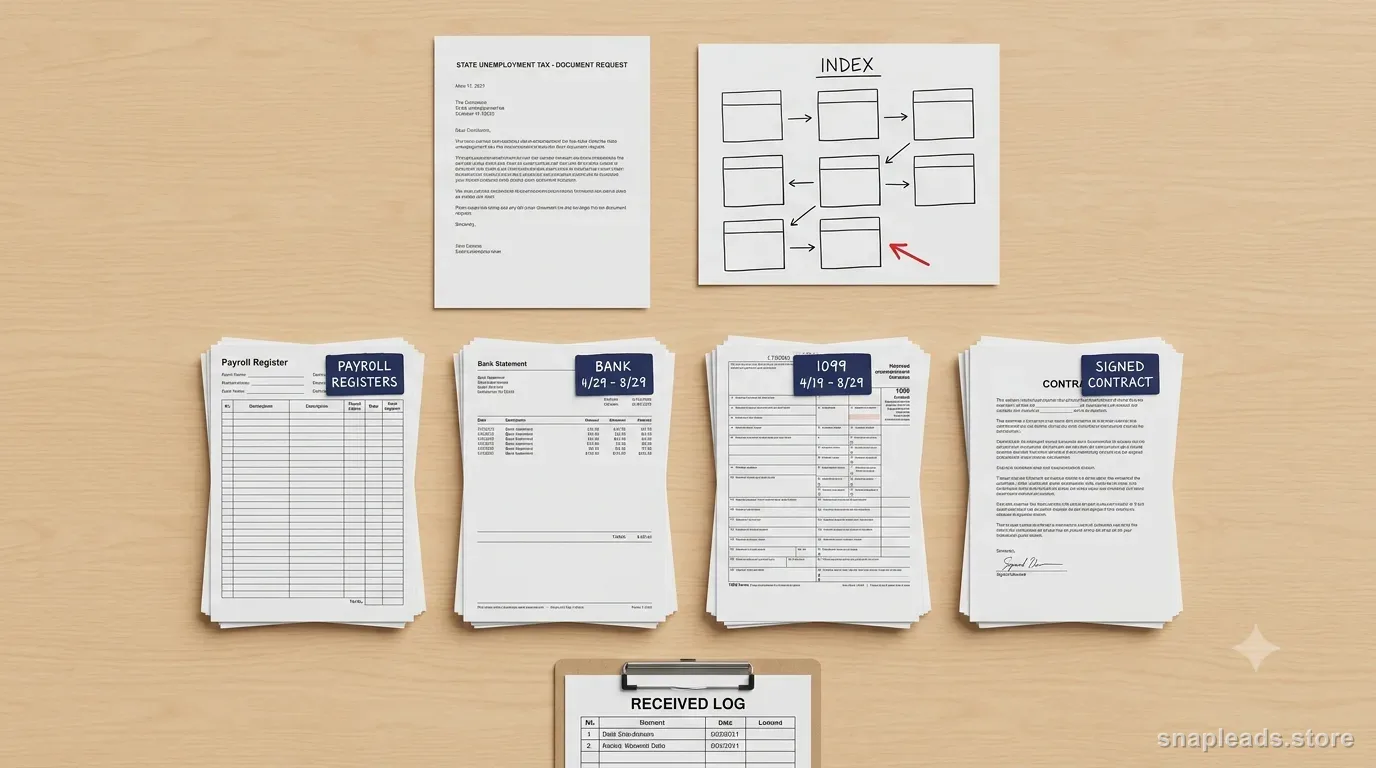
- Preserve payroll, accounts-payable, worker, contract, invoice, filing, and payment records rather than deleting older material while the period is disputed. Organize state audit records
 What Can Trigger a State Unemployment Tax Worker-Classification Audit?
 1099 or W-2? Start With the IRS Three-Category Classification Framework
 Can a Partner or Partnership-Taxed LLC Member Be Put on W-2 Payroll? The Federal Employment-Tax Rule Is Different
 How Far Back Can the IRS Audit Worker Misclassification?
 What Happens When You Get Audited by Unemployment?
 How to Organize a State Unemployment Audit Document Request