Can a business with only 1099 contractors get audited?
Yes. Reporting zero employees does not prevent a state unemployment tax agency from reviewing whether people paid outside payroll should have been reported as employees. Texas Workforce Commission guidance gives a concrete example: a former worker can file an unemployment claim, and if no wages were reported for that claimant the Tax Department may investigate. TWC also identifies complaints, random audits, and selection criteria such as workforce changes or industry history as other audit paths.
The important distinction is between 'no employees were reported' and 'the agency agrees there were no employees.' A business that pays every service provider on Form 1099 has made a reporting decision; it has not obtained a blanket worker-status determination from every state. This is employer education, not legal or tax advice.
A contractor's unemployment claim can create the first status decision
A person who considered themself a contractor may still file for unemployment after the engagement ends. The state then has to determine whether the person's services were covered employment for UI purposes. If the company reported no wages, the claim can expose the classification question and lead the tax unit to examine the relationship. That does not mean every contractor claim automatically becomes a full audit; the point is that a zero-payroll account does not eliminate the state's need to decide status.
Prepare for that possibility before separation. Keep the worker's contract, invoices, payment records, work location, pricing evidence, schedule, tools, other-client evidence, and records showing how work was directed. A clean file lets the employer answer a claim or classification inquiry from facts rather than reconstructing the relationship after the contractor has left.
The agency may widen from one claimant to the contractor population
Texas guidance states that when a report alleges worker misclassification, the Tax Department may audit the company's entire workforce. In any state, an examiner who finds one questionable contractor may ask whether similarly situated people were treated the same way. Businesses using twenty contractors under one operating model should not assume an inquiry about one person can never reach the rest.
Create contractor cohorts by role, contract version, work location, and operating model. If all designers follow the same schedule and management process, review them as a population. If some are outside agencies selling defined projects and others are individuals working indefinitely inside the team, separate them. A worker-by-worker file is necessary, but a population map reveals systemic classification patterns.
Sole proprietors are not automatically exempt from worker-status review
A contractor's LLC, DBA, EIN, business card, or invoice can support evidence that the provider operates a business, but entity paperwork does not automatically determine unemployment-tax status. State tests differ, and California, Texas, and other states apply their own statutory or common-law frameworks. The hiring company should document the relationship under the state rule that applies where the services are performed.
Likewise, the hiring business being a sole proprietorship does not shield it from an employer determination. A sole proprietor can have employees, contractors, or both. The agency looks at the service relationship and applicable coverage rules, not whether the hiring entity itself has incorporated.
Zero payroll can make recordkeeping more important, not less
When a business has no payroll register, payments to workers may be scattered through accounts payable, credit cards, bank transfers, peer-to-peer payment services, reimbursements, or owner draws. An auditor may need those records to reconstruct who was paid for services. Texas explicitly requires records on workers other than employees, including independent contractors, in its unemployment-tax audit guidance.
Build an annual service-provider ledger even when you believe every provider is independent. Include legal name, tax ID or W-9 status, work state, service type, contract dates, total payments, information return, and classification-review date. Reconcile the ledger to the general ledger and Forms 1099 before filing season.
Reconcile non-payroll compensation by person, not only by vendor account. A single contractor may appear under professional services, project expense, travel reimbursement, and credit-card charges during the same year. Auditors reviewing whether compensation should have been wages need a person-level total, while the business also needs to distinguish genuine expense reimbursements from payment for services.
What to do after receiving an audit notice with no payroll history
Do not respond by saying 'we have no employees' and stopping there. First identify the period and workers the state is asking about. Produce the accounts-payable and contractor records requested, map each person to the applicable state test, and document why the business concluded the person was not an employee. If facts are mixed, flag the worker for deeper review rather than manufacturing certainty.
If the audit later reclassifies one or more workers, separate status, wage amount, audit period, and tax computation. A business can disagree with some workers but agree about others. The absence of historical payroll makes reconciliation more work, which is another reason to maintain an audit-ready contractor ledger from the start.
If the company has never registered for state unemployment tax, do not assume that the absence of an account ends the inquiry. Determine whether the agency is reviewing employer status, worker classification, unreported wages, or all three. Registration, classification, and tax calculation are related steps but should be documented separately so the response does not concede more than the facts support.
Zero-payroll audit file
What a 1099-only business should maintain
The goal is to prove what happened, not to manufacture contractor evidence after a claim is filed.
| Record | Why keep it | Audit use |
|---|---|---|
| Provider master list | Shows everyone paid for services | Defines the review population |
| Contracts / scopes | Shows intended business arrangement | Compare contract with actual work |
| Invoices / payments | Reconciles compensation | Tie AP ledger to Forms 1099 |
| Work-location record | Identifies applicable state | Route to state UI test |
| Operational evidence | Shows pricing, schedule, tools, control, clients | Support status facts |
| Annual review note | Shows when classification was revisited | Explain role or model changes |
WORKED EXAMPLE
Worked example: agency with 12 freelancers and zero payroll
A digital agency has never run payroll. It pays 12 individuals on Form 1099-NEC and believes everyone is a freelancer. One designer ends a two-year engagement and files for unemployment. The state asks why no wages were reported and requests records about the relationship. The agency cannot end the inquiry by pointing to the 1099; it produces the contract, payment ledger, schedules, project assignments, and evidence about pricing and other clients.
The reviewer then asks about three other designers working under the same team lead. The agency uses its contractor cohort map to show which designers worked under the same model and which were separate project vendors. That population-level record is more useful than twelve identical contractor agreements.
COMMON QUESTIONS
Frequently asked
- Will I automatically be audited if a contractor files for unemployment?
- Not necessarily. But a claim can create a worker-status review because the state must decide whether wages should have been reported.
- Can a company with zero W-2 employees still owe unemployment tax?
- Yes, if the state determines that one or more people treated as contractors were actually employees under its law.
- Does having Forms W-9 and 1099 protect against an audit?
- No. Those forms document tax reporting; they do not by themselves establish state worker status. Prepare 1099 records for a UI audit
- What can trigger a broader contractor review?
- Triggers vary by state, but claims, complaints, random audits, and agency selection criteria can all matter. State UI audit triggers
 What Can Trigger a State Unemployment Tax Worker-Classification Audit?
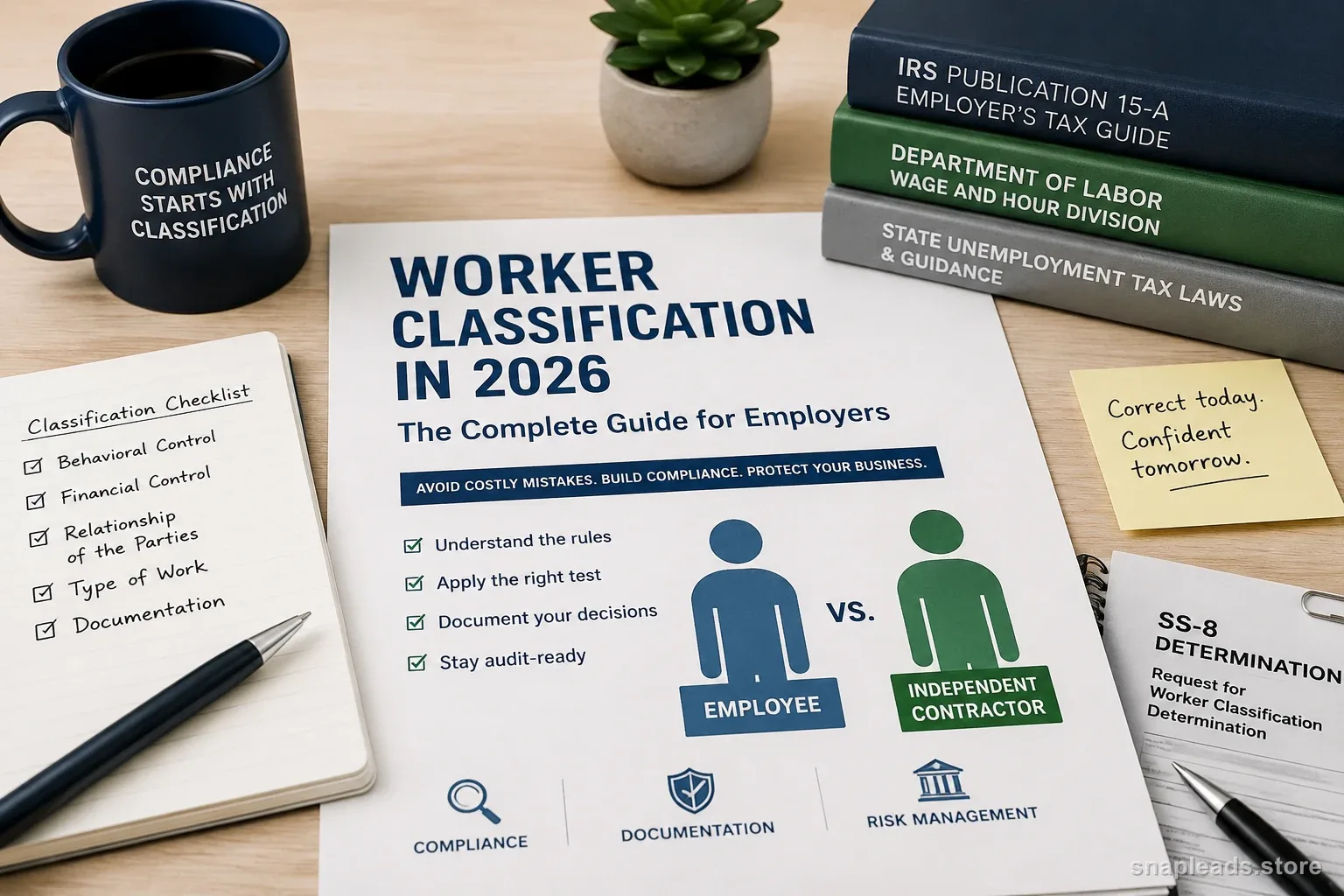 1099 or W-2? Start With the IRS Three-Category Classification Framework
 How Does a Nonprofit Classify Workers: 1099 or W-2?
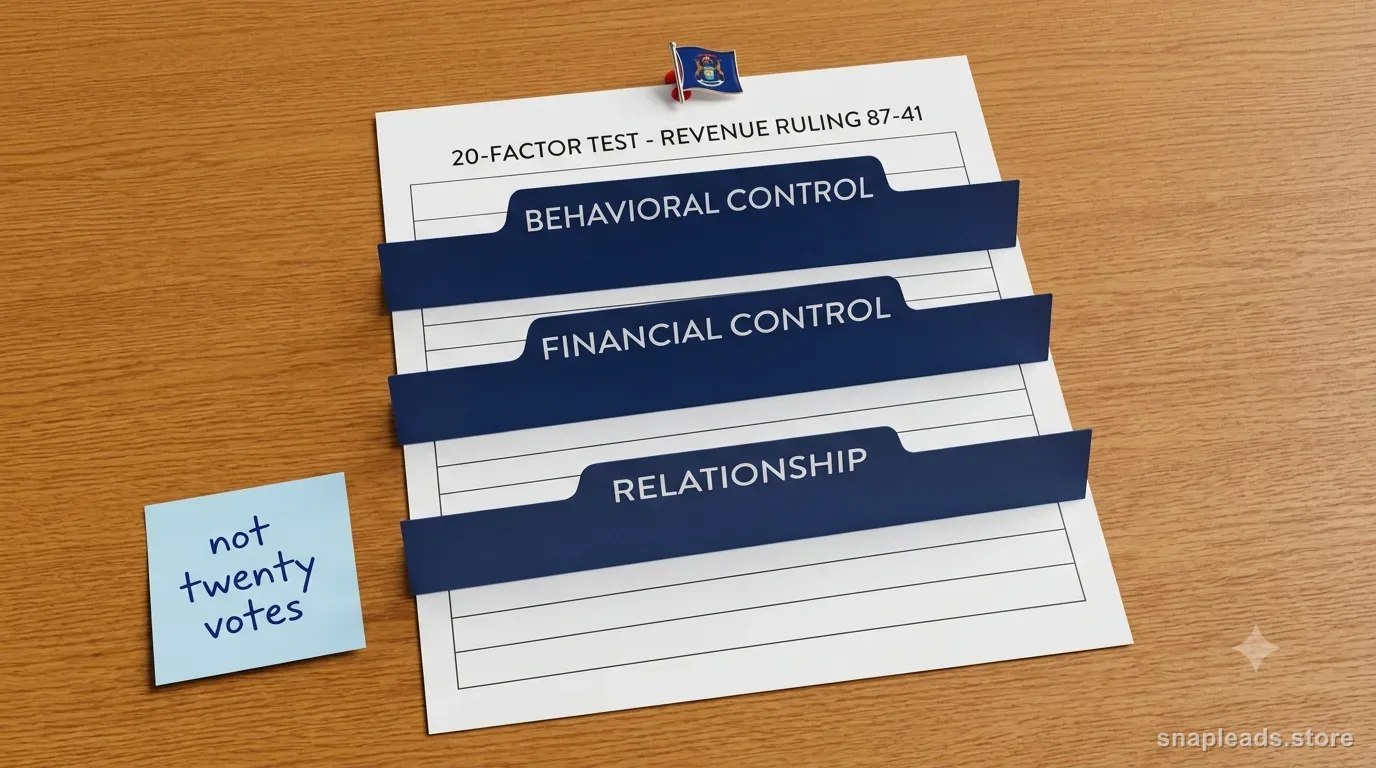 Michigan UIA Contractor Classification: Reconcile the 20-Factor Review Before an Audit or Claim
 Texas Workforce Commission Contractor Test: Review the Actual Direction and Control
 What Happens When You Get Audited by Unemployment?