
Can you be a W-2 employee and 1099 contractor for the same company?
Yes, a person can potentially perform services for the same business in two genuinely different capacities, but the company must classify each relationship based on its facts. The strongest example is a worker who has a normal employee position and, outside that role, operates a real separate business that provides a different service under different economic terms. The existence of a W-2 does not automatically prohibit a separate contractor relationship, and a Form 1099 does not automatically make the second role independent.
The risky pattern is using two tax forms to divide the same work. If a bookkeeper is an employee Monday through Thursday and the company calls Friday bookkeeping “contract work” merely because it is paid from accounts payable, the payment channel does not change the right-to-control analysis. The IRS considers behavioral control, financial control, and the type of relationship. This is employer education, not legal or tax advice.
The two roles need their own factual records
Document the employee role and contractor engagement separately. For the employee role, retain the job description, payroll record, schedule, supervision structure, and benefit terms. For the alleged contractor role, retain a separate scope of work, pricing method, invoices, evidence of business expenses, tools or equipment, marketing to other clients, and the worker's ability to control how the deliverable is produced. A second contract that simply renames part of the employee's existing duties is weak evidence.
Ask whether a customer in the open market would buy the second service as a standalone project. If the worker's outside business has its own clients, pricing, equipment, risk of loss, and defined deliverables, that supports a distinct financial relationship. None of those facts is a magic requirement, and no single fact controls the result; the point is to test whether there are actually two businesses relationships rather than two pay labels.
Same services are the biggest red flag
The most difficult dual-status cases are those in which both payments compensate substantially the same services. Form 8919 itself recognizes a situation in which a worker receives both Form W-2 and Form 1099-MISC or 1099-NEC from the same firm for the same services; current reason code H can be relevant to a worker reporting uncollected Social Security and Medicare tax. That does not mean every dual-form situation is automatically misclassification, but it shows why the service comparison matters.
Build a service matrix that lists the tasks, customers served, work location, schedule, approval process, tools, pricing, and deliverables for each role. If the columns are nearly identical, the company should not rely on a different cost center or weekend schedule to create contractor status. If the roles are genuinely different, the matrix should make that difference visible without legal adjectives.
Separate pricing and business risk matter more than a second title
Independent contractors are generally in business for themselves and may have meaningful control over the financial side of the work. In a legitimate second engagement, the worker may quote a project fee, absorb some unreimbursed costs, provide specialized equipment, correct defective work without simply billing employee hours, and make services available to other customers. A different title such as “consultant” or use of the worker's LLC is much less informative if the company still controls the work as part of the employee's regular function.
Likewise, paying the contractor role at a higher rate does not settle status. A higher fee can reflect real business costs and risk, but it can also be an arbitrary label. Review the whole relationship and document why the second service is economically distinct. The company should also confirm whether state law uses a stricter test for the services or location involved.
FLSA and state rules may treat the arrangement differently
Federal tax common-law rules are not the only classification framework. The Department of Labor's FLSA analysis examines economic reality and whether the worker is in business for themself or economically dependent on the employer. A state unemployment or wage statute may use yet another test. A dual-status arrangement that has a defensible federal tax analysis can still require separate review under other laws.
For that reason, the company should not publish an internal policy saying “dual status is allowed if the jobs are different.” The better policy is procedural: dual status requires a documented review of each role under the applicable federal and state frameworks before the second payment stream starts, plus a later review if the employee duties or contractor scope changes.
A practical approval checklist for dual status
Before accounts payable issues a 1099 to an existing employee, require a reviewer to answer five questions in writing: What is the employee's normal role? What exact deliverable is being purchased outside that role? Who controls the method and schedule for the outside work? How was the price set and what business costs or risk does the worker bear? Does the worker offer this service to other customers? Add the applicable state classification rule when the services are performed outside the company's home state.
Then reconcile the arrangement at year-end. Confirm that payroll paid employee services and accounts payable paid only the distinct contractor scope. If duties blended during the year, escalate before information returns are issued. A year-end tax form should reflect the underlying relationship; it should not be the first moment anyone asks whether there were actually two roles.
Dual-role matrix
Compare the W-2 role with the alleged 1099 role
A defensible dual-status file should show two genuinely different service relationships, not one job split across two payment systems.
| Fact | Employee role | Alleged contractor role | Red flag |
|---|---|---|---|
| Services | Regular job duties | Separate deliverable or business service | Same tasks on both sides |
| Pricing | Salary or employer-set wage | Project quote or independently negotiated fee | Company simply assigns a second hourly rate |
| Schedule / method | Employer-directed | Worker controls project method and timing within deliverable needs | Same manager and schedule as employee work |
| Tools / costs | Primarily employer-provided | Meaningful separate business tools or costs where relevant | No operational distinction |
| Customers | Serves employer's business | Separate business may serve other customers | Outside service exists only for the employer |
| Records | Payroll, job description, benefits | Scope, invoice, business records | Only a second contract label distinguishes the role |
WORKED EXAMPLE
Worked example: employee project manager with a photography business
A marketing agency employs Maya as a full-time project manager at $78,000. Maya also operates a photography business with separate clients, insurance, cameras, editing software, a public portfolio, and project pricing. The agency hires Maya's photography business for a one-day corporate event for a $4,500 fixed fee. The event photography is not part of Maya's project-management duties, and the agency does not direct camera settings, editing workflow, or shooting method.
The agency keeps the employee job description and the photography scope separately, routes salary through payroll and the event invoice through accounts payable, and documents the state where the event occurred. That fact pattern is stronger than calling five hours of Maya's normal project-management work a “consulting project” and paying those hours by 1099.
COMMON QUESTIONS
Frequently asked
- Can my employer give me both a W-2 and 1099 in the same year?
- Potentially, if the forms reflect genuinely different relationships. The fact that two forms were issued does not itself prove that the split was correct.
- Can the same job be partly W-2 and partly 1099?
- Splitting substantially the same services between payroll and contractor reporting is a major classification concern. Analyze the actual services and control, not the payment label.
- What if I have an LLC for the 1099 work?
- An LLC can support a separate business operation, but entity paperwork alone does not decide worker status. The actual relationship still matters. Why paperwork alone does not decide status
- What if my role changed during the year?
- A real change in duties and business relationship can justify a new classification analysis. Document the effective date and facts instead of retroactively relabeling the same work. Review classification after role changes
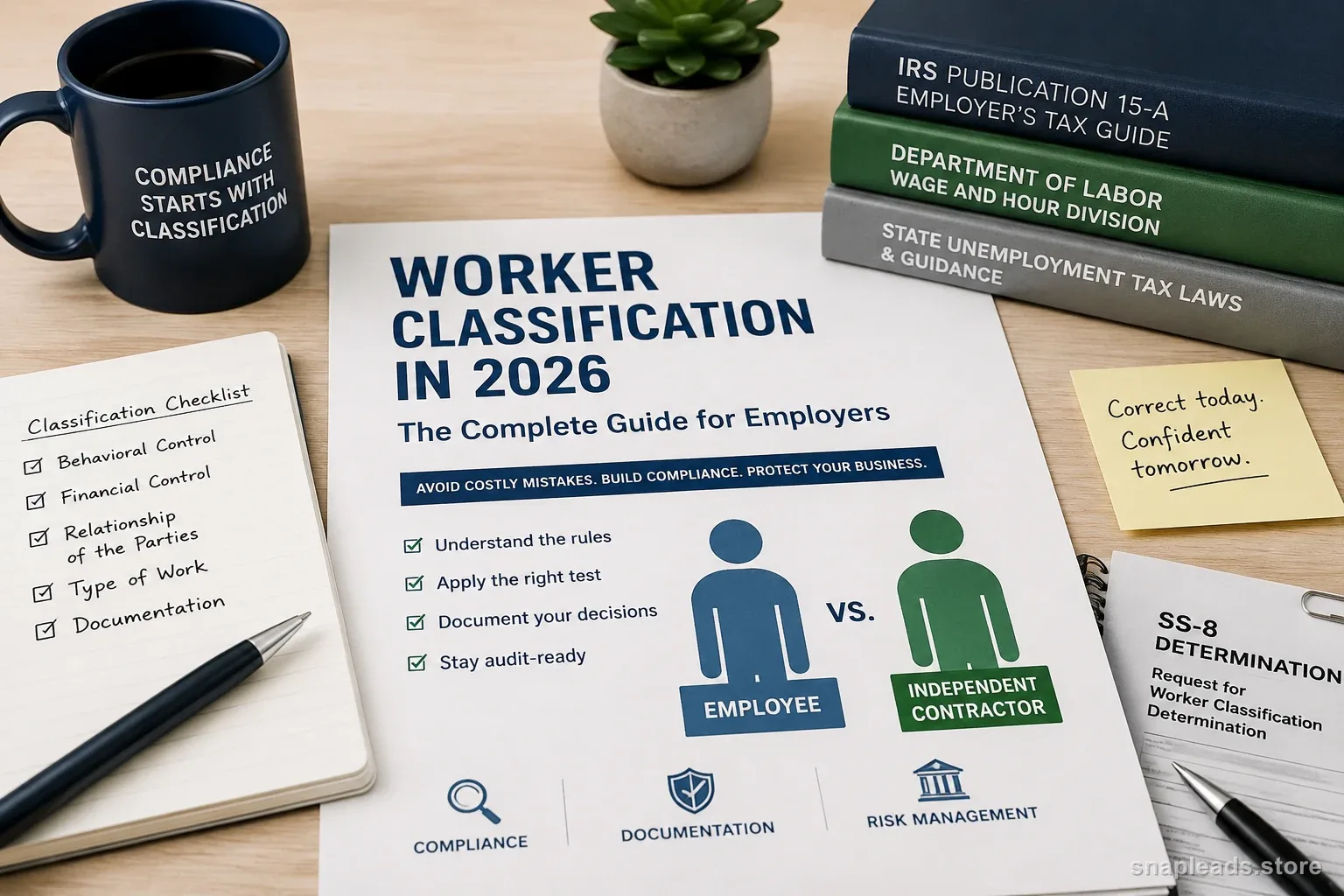 1099 or W-2? Start With the IRS Three-Category Classification Framework
 Are Delivery Drivers 1099 or W-2?
 A Pre-Hire Worker Classification Review for Small Businesses
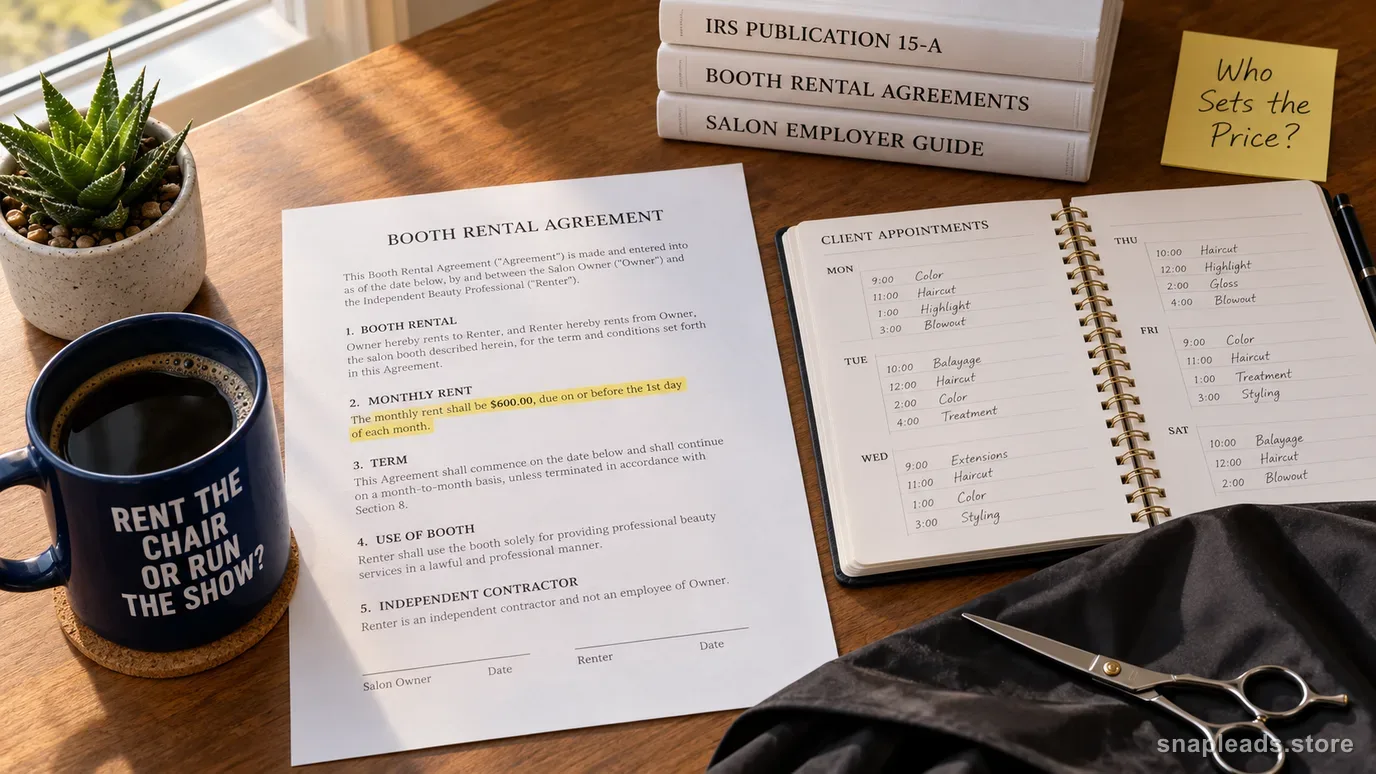 Salon Booth Renter vs. Employee Stylist
 Is a Bookkeeper 1099 or W-2?
 Is a Personal Trainer at a Gym an Employee or Contractor?