Is a construction subcontractor an employee or 1099 contractor?
The word 'subcontractor' does not determine federal employment-tax status. The IRS still looks at the actual right to control the work, the financial relationship, and the type of relationship. In construction, useful facts include whether the person operates a separate business, bids or negotiates a defined scope, supplies meaningful tools or equipment, controls the method of performing the contracted result, bears costs and rework risk, serves or markets to other customers, and is responsible for completion.
A worker who arrives every weekday, uses the general contractor's tools, is paid an hourly rate, receives task-by-task instructions from the same foreman as employees, performs whatever labor is assigned, and has no independent customer market presents a different record from a plumbing company that bids a defined rough-in scope, supplies its crew and equipment, invoices milestones, and bears responsibility for correction of its work. This is employer education, not legal or tax advice.
License, LLC, insurance, and Form W-9 are evidence—not automatic status
Construction businesses often collect a certificate of insurance, contractor license, W-9, EIN, or LLC documents and then stop the classification review. Those records can support the existence of a separate business, but federal status still depends on the relationship. A newly formed LLC owned by one laborer does not neutralize daily control, hourly pay, company tools, or lack of business risk.
The opposite mistake is also possible. A real specialty contractor can work on the general contractor's site, follow project drawings, comply with safety rules, and coordinate with the project schedule without becoming an employee solely because the project imposes those requirements. Separate required project specifications from control over the contractor's ordinary means and business operations.
Defined scope and responsibility for completion are strong operational evidence
A subcontract should identify the specific construction result: framing a stated building section, completing electrical rough-in, installing a defined roofing system, or performing another bounded scope. The subcontractor's business should understand the price, change-order process, schedule commitments, who supplies materials and equipment, warranty or rework responsibility, and what happens if costs exceed the bid. Those facts show how the business opportunity and risk actually operate.
Hourly or time-and-materials pricing is not automatically employment under federal common law, but a relationship can become difficult to distinguish from labor payroll when the 'subcontractor' has no defined deliverable and simply supplies one person's hours under the general contractor's daily direction. Document what business result is being purchased, not merely how the worker is paid.
Minnesota shows why state construction law must be checked separately
Minnesota provides a current example of a construction-specific state rule. For commercial or residential building construction or improvement services performed on or after March 1, 2025, the Minnesota Department of Labor and Industry states that an individual is an employee unless the individual is operating as a business entity and meets the updated 14 statutory requirements. The statute addresses separate business existence, equipment or facilities, market availability, tax and registration compliance, written contracts, invoicing, control of the means, costs, completion responsibility, and profit or loss.
That Minnesota framework is not the nationwide construction test. It demonstrates why a federal 1099 conclusion should not be copied into every state's unemployment, wage, or workers' compensation file. A contractor working in another state may face a different construction statute or general worker-classification rule.
Do not confuse code, safety, or owner specifications with employee control
Construction work naturally involves plans, building codes, inspections, safety requirements, owner specifications, sequencing, and coordination among trades. Those requirements can constrain the result without necessarily dictating the subcontractor's internal business method. Minnesota's own misclassification FAQs, for example, explain that compliance with technical project specifications, plans, and code requirements does not by itself make a subcontractor an employee under its construction test.
The practical review should therefore separate mandatory project constraints from personnel-style supervision. Who hires and directs helpers? Who decides the crew's internal work sequence? Who owns or rents business equipment? Who fixes defective work? Who bears excess labor cost? Who can accept other projects? Those facts are more useful than a vague note saying the general contractor 'supervised the site.'
Create a subcontractor file that can survive a payroll or UI audit
Before work starts, retain the signed scope, bid or pricing basis, W-9, business and license records where required, insurance evidence, project responsibilities, and state-specific classification documentation. During the project, preserve invoices, change orders, proof of payment, correspondence showing who controlled means and methods, and records of corrective work. After the project, keep the completion record with the worker-classification file rather than only in the project folder.
Then compare similarly situated workers. If three carpenters perform the same ongoing labor under the same foreman but one is W-2 and two have LLCs and receive 1099s, the company needs a real operational explanation. Entity paperwork alone is unlikely to explain a classification split where the work is otherwise the same.
For multi-tier jobs, identify the actual contracting chain as well. A general contractor may contract with a real subcontracting company that then employs its own crew; that is different from treating each individual crew member as the general contractor's direct 1099 worker. Preserve the entity-level subcontract, the crew employer information where relevant, and invoices that show which business actually supplied the labor.
Construction reality check
Subcontract business vs. disguised labor-only arrangement
Use this federal-operational matrix first, then apply the specific state construction law where the work is performed.
| Fact | Separate subcontractor business | Employee-like labor pattern |
|---|---|---|
| Scope | Defined construction result under subcontract | Whatever daily labor the foreman assigns |
| Pricing | Bid, project, milestone, or negotiated commercial terms | Regular hourly pay set by hiring contractor |
| Means | Business controls ordinary performance methods | Foreman directs detailed day-to-day work |
| Costs/risk | Business bears meaningful job costs and rework risk | Little economic risk beyond hours worked |
| Market | Offers similar work to other customers | Works as continuing labor for one contractor |
| State law | Meets applicable construction-specific statutory requirements | Paperwork fails one or more required state conditions |
WORKED EXAMPLE
Worked example: carpenter LLC versus framing subcontract
A general contractor pays Sam's newly formed LLC $38 per hour. Sam works 7 a.m. to 3:30 p.m. every weekday, uses the general contractor's saws and materials, follows the framing foreman's task assignments, does not bid scopes, has no other customers, and is paid for all hours whether the assigned work finishes efficiently or not. The LLC and W-9 do not end the classification inquiry.
The same project hires North Frame Inc. for $46,000 to complete a defined framing scope. North Frame supplies its crew and major tools, controls its internal sequence within project milestones, invoices by completion stages, handles specified rework at its cost, and performs projects for other builders. The GC documents that commercial relationship and separately checks the construction-classification statute in the state where the project is located.
COMMON QUESTIONS
Frequently asked
- Does a construction license make someone a 1099 subcontractor?
- No. A license may be required and can support a separate business, but federal and state classification rules examine additional facts.
- Can a subcontractor be paid hourly?
- Hourly pay does not automatically decide federal status, but labor-only hourly arrangements with company control and little business risk deserve close review.
- Does following plans and building codes make a subcontractor an employee?
- Not by itself. Project specifications and legal requirements are different from controlling the subcontractor's ordinary business means and methods.
- Does Minnesota have a special construction contractor test?
- Yes. Minnesota's current law uses a construction-specific 14-requirement framework for covered work performed on or after March 1, 2025. Minnesota worker-classification routing guide
- Should classification be reviewed before hiring a subcontractor?
- Yes. Define the scope, operating model, and state rule before the worker starts rather than trying to fix the file at year-end. Classification review before hiring
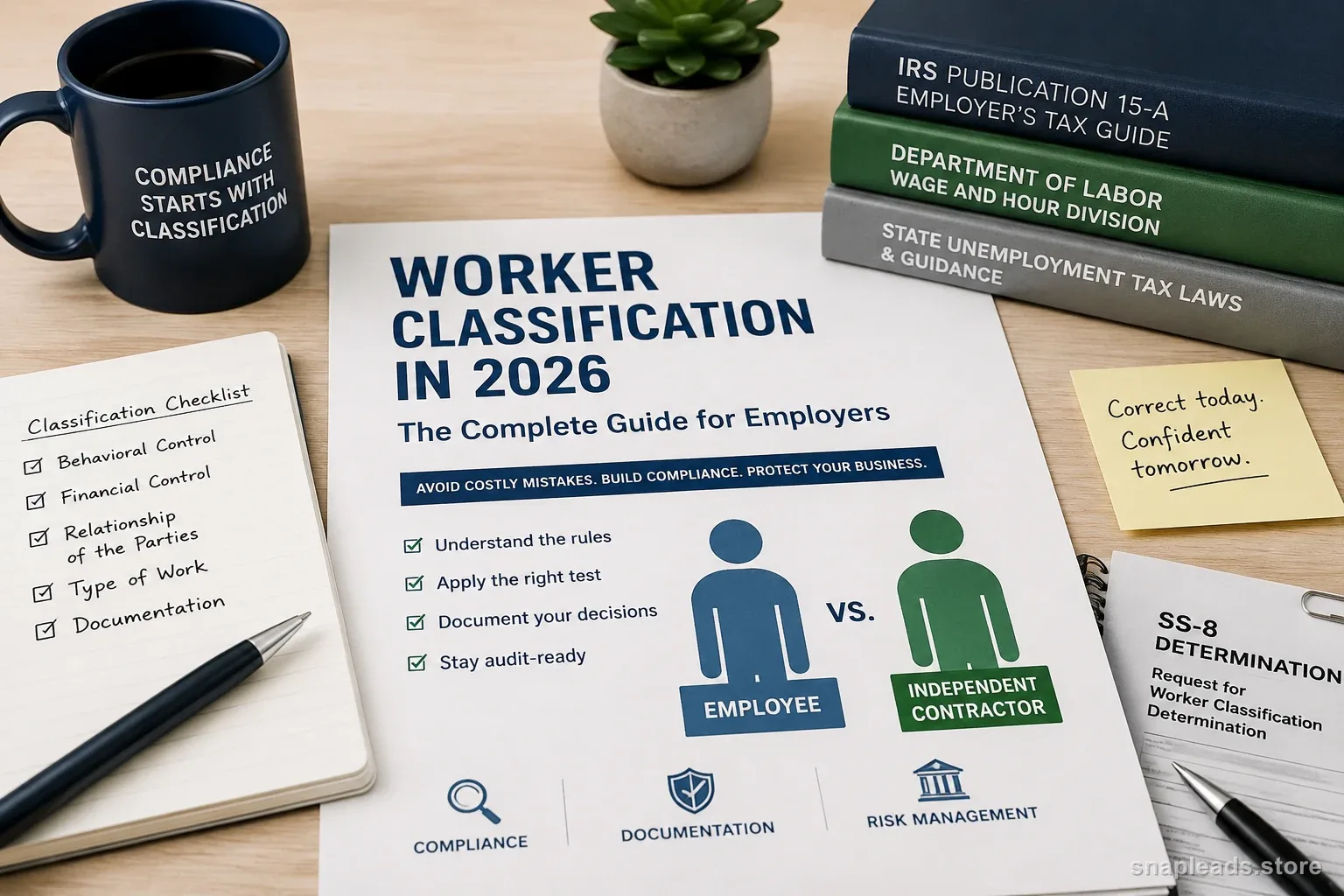 1099 or W-2? Start With the IRS Three-Category Classification Framework
 Corporate Officers, Shareholder-Employees, and Directors: Who Is an Employee for Federal Employment Taxes?
 Nebraska Construction and Delivery Classification: Contractor Registration Is Not the Same as Employee Status
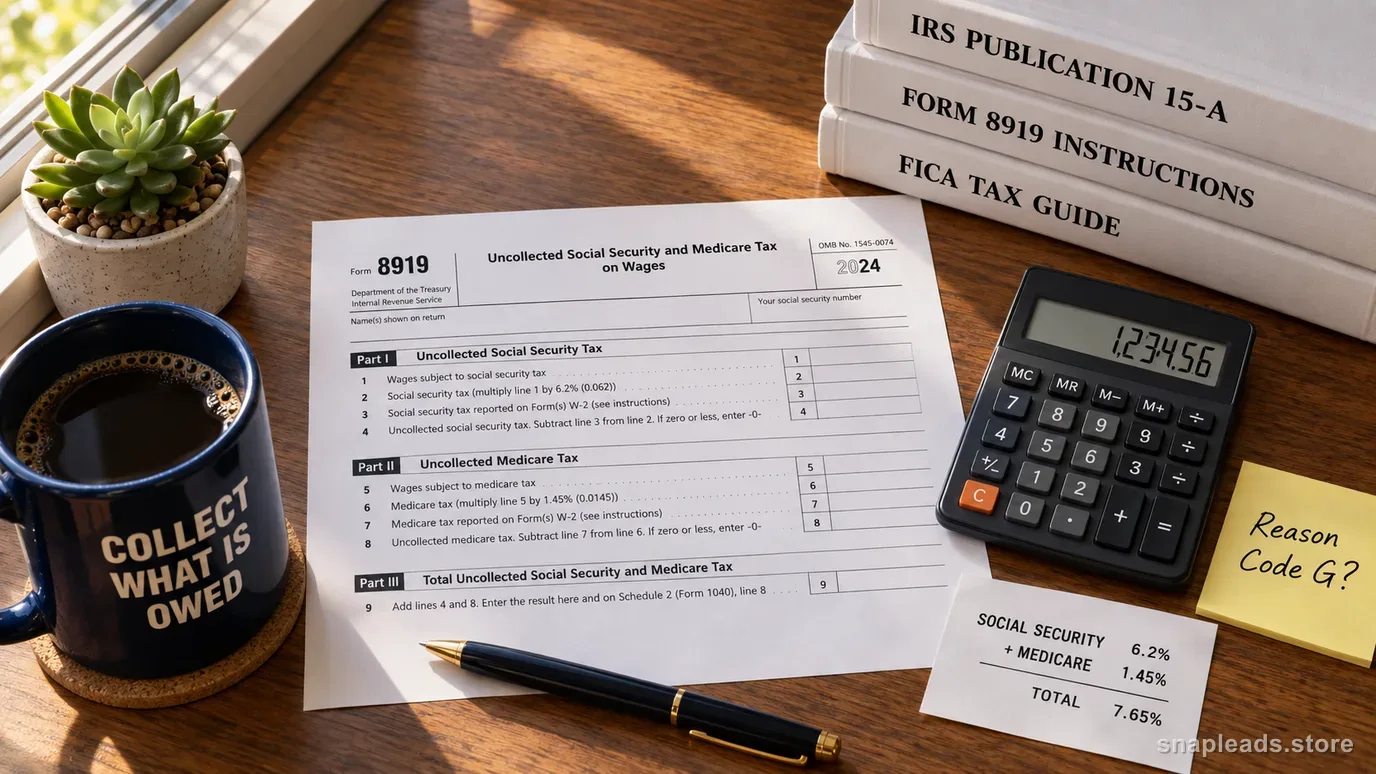 Form 8919: Uncollected Social Security and Medicare Tax
 Minnesota Worker Classification in 2026: Separate the General UI Review From Construction and Trucking Rules
 Should I Pay My House Cleaner as 1099 or W-2?