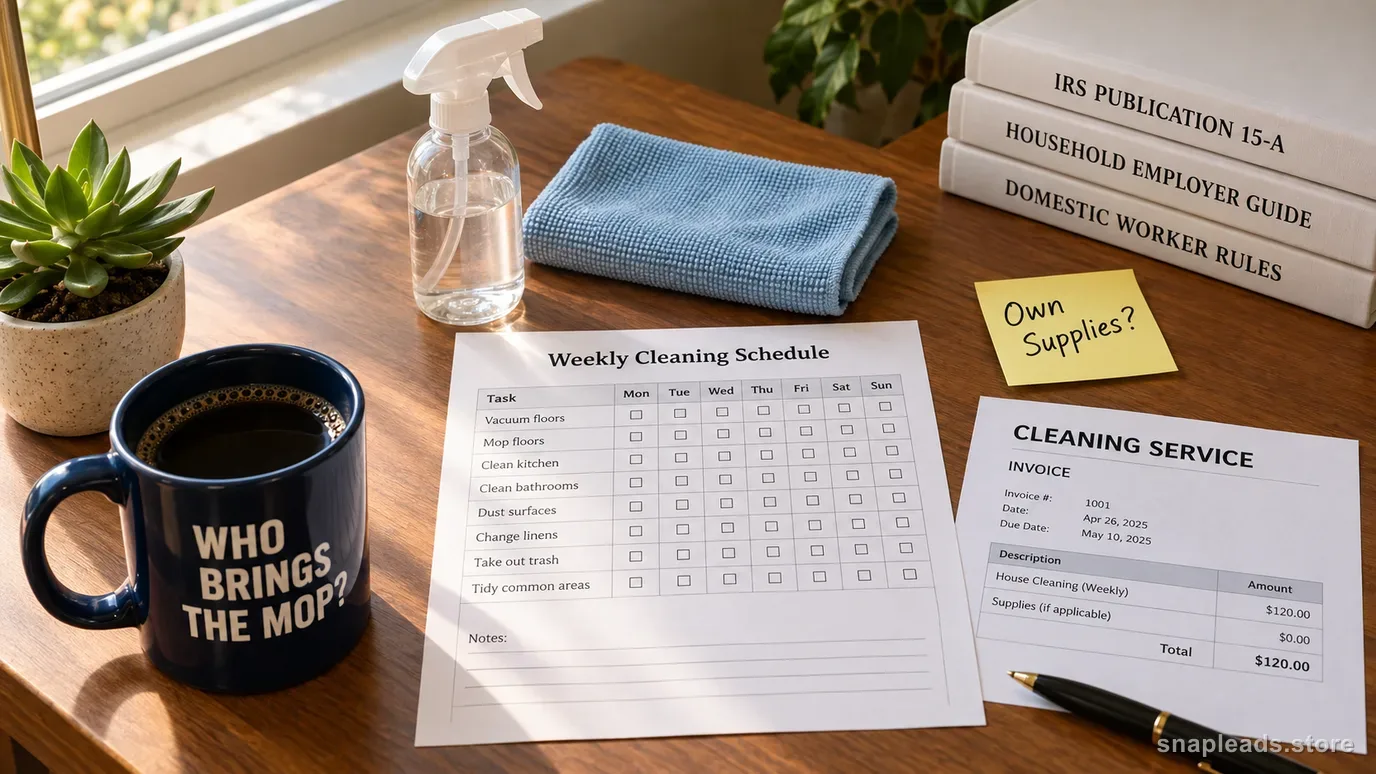
Should you pay a house cleaner as 1099 or W-2?
For a cleaner working in or around your private home, start with the household-employee rules rather than a small-business 1099 checklist. IRS Publication 926 says a household worker is your employee if you can control not only what work is done but how it is done. It specifically lists housecleaning workers, housekeepers, and maids as examples of household work. The worker can still be an employee even if the work is part time, paid by the day, or arranged through a referral list.
That does not mean every person who cleans a house is automatically a household employee. Publication 926 also describes a self-employed worker as someone who controls how the work is done, usually provides their own tools, and offers services to the general public in an independent business. The distinction is between hiring a worker into your household relationship and purchasing cleaning services from an independent business. This is household-employer education, not tax or legal advice.
Do not use the $3,000 threshold as the classification test
For 2026, Publication 926 states that Social Security and Medicare taxes generally apply to cash wages of $3,000 or more paid to one household employee during the year. That threshold is important after you have determined that the worker is a household employee. It does not convert an employee into an independent contractor when annual pay is below the threshold, and it does not make a true cleaning business your employee once payments cross the threshold.
This sequence matters because many household-employment articles start with the tax amount and accidentally turn a tax-payment threshold into a status rule. First decide whether the individual is your employee. Then review Social Security and Medicare, FUTA, state unemployment, W-2, Schedule H, and recordkeeping requirements that apply to that employee and year.
An independent cleaning business should look like a business in practice
A homeowner may hire a cleaning company that sends its own workers, determines how the cleaning is performed, supplies its own tools and products, sets or negotiates the service price, reschedules crews, and serves many customers. The homeowner can still specify the result—such as cleaning the kitchen and bathrooms by Friday—without necessarily controlling how the company performs the service. The contract, invoices, business name, insurance, and public availability can support the business relationship, but no single item is conclusive.
A different picture emerges when the homeowner hires one person indefinitely, provides all supplies, gives detailed instructions for how each task must be done, fixes the weekly schedule, and directly supervises the work. Calling the person a “cleaning contractor” or paying cash does not override those facts. The IRS common-law principle focuses on the right to control, not the payment label.
Agency placement does not automatically remove household-employer status
Publication 926 expressly notes that a worker can be your household employee even when you hired the person through an agency or from a list supplied by an agency or association. The important question is the actual relationship. Some agencies employ the cleaners themselves and sell cleaning services to households. Other businesses may merely refer or place workers. The homeowner should identify who has the right to direct the worker and who is responsible for payroll before assuming the agency name resolves the issue.
Ask for the engagement terms and invoicing structure. Is the household paying a cleaning company that controls its employees, or paying the individual directly? Who can replace the cleaner? Who sets pay? Who provides instructions and resolves performance problems? Those facts help determine whether the household has an employment relationship or is a customer of another business.
Household employee reporting is different from business payroll
When a house cleaner is a household employee and the applicable tax thresholds are met, Publication 926 explains federal Social Security, Medicare, FUTA, W-2, and Schedule H procedures. Federal income-tax withholding is generally not mandatory for household employees unless the employee asks and the employer agrees, while Social Security and Medicare rules follow their own thresholds and exceptions. The household should also obtain the information needed for employment eligibility and wage reporting.
State rules require a separate check. Publication 926 directs household employers to determine state unemployment obligations, and states can impose registration, wage, leave, workers' compensation, or domestic-worker requirements beyond federal tax rules. Do not assume that completing Schedule H satisfies every state obligation.
Create a one-page cleaner classification file
Document who hired the cleaner, who controls method and schedule, who provides supplies, whether the worker has a separate cleaning business, how price is set, whether substitutes or crews can be sent, who handles complaints, and who bears the cost of rework. Keep invoices, agreements, payment records, and any agency terms. The goal is not to count contractor points; it is to preserve the actual relationship before memories change.
Review the file when the arrangement changes. A cleaner who originally arrived through a company may later be hired directly by the homeowner, or an individual cleaner may build an independent business with crews and multiple customers. Classification follows the current facts, so a permanent label applied at the first visit can become stale.
House-cleaner routing table
Are you hiring a worker or buying cleaning services?
Use this table to identify the relationship before applying household-employment tax thresholds.
| Fact | Household employee pattern | Independent cleaning business pattern |
|---|---|---|
| Who performs the work | Individual hired into the household relationship | Company or provider operating a separate business |
| Method | Household has the right to direct how work is done | Provider controls cleaning method |
| Supplies / tools | Primarily household-provided | Provider commonly supplies business tools/products |
| Scheduling | Household sets recurring work schedule | Provider manages service schedule within agreed needs |
| Market | Worker functions mainly in this household relationship | Provider offers services broadly to customers |
| Tax step | Then check 2026 household tax thresholds and Schedule H | Review business payment/reporting rules instead |
WORKED EXAMPLE
Worked example: direct cleaner versus cleaning company
A family pays Rosa $180 every Friday to clean its home. The family sets the arrival time, provides all products and equipment, gives a room-by-room method checklist, and expects Rosa personally to perform the work. Rosa does not advertise a cleaning business or send substitutes. In 2026, the family projects more than $3,000 of cash wages, so after determining household-employee status it reviews the Social Security, Medicare, W-2, Schedule H, and state requirements in Publication 926.
The family also uses BrightHome Cleaning LLC twice for deep cleans. BrightHome quotes a flat service price, sends different crew members, brings its own products, controls its work method, and serves many customers. The family keeps BrightHome's invoices and agreement separately rather than assuming every cleaning payment has the same classification.
COMMON QUESTIONS
Frequently asked
- Is my house cleaner automatically a 1099 contractor if she works for other families?
- No. Other customers can be evidence of an independent business, but you still review the actual right to control and the relationship with your household.
- What is the household employee threshold for 2026?
- Publication 926 states that Social Security and Medicare taxes generally apply when you pay one household employee $3,000 or more in cash wages during 2026. That threshold does not determine whether the worker is an employee.
- Do I use Schedule H for a household employee?
- Schedule H is the federal household-employment tax schedule used when its filing requirements apply. Publication 926 explains the current thresholds and forms. Household payroll workflow
- Does a contractor agreement make my cleaner self-employed?
- No. A written agreement is one relationship fact, but the actual control and business circumstances govern. Why contracts do not decide status
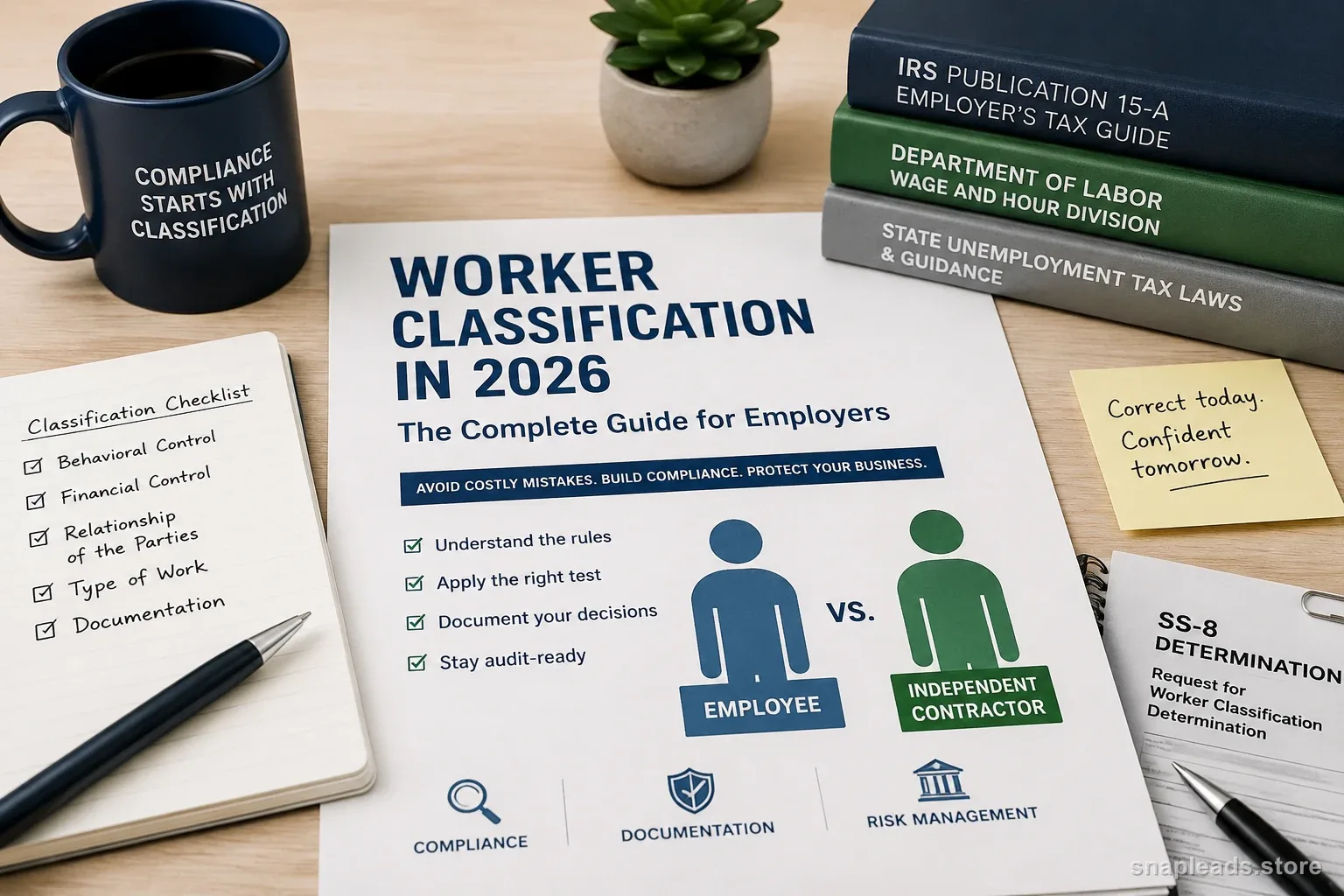 1099 or W-2? Start With the IRS Three-Category Classification Framework
 Is a Bookkeeper 1099 or W-2?
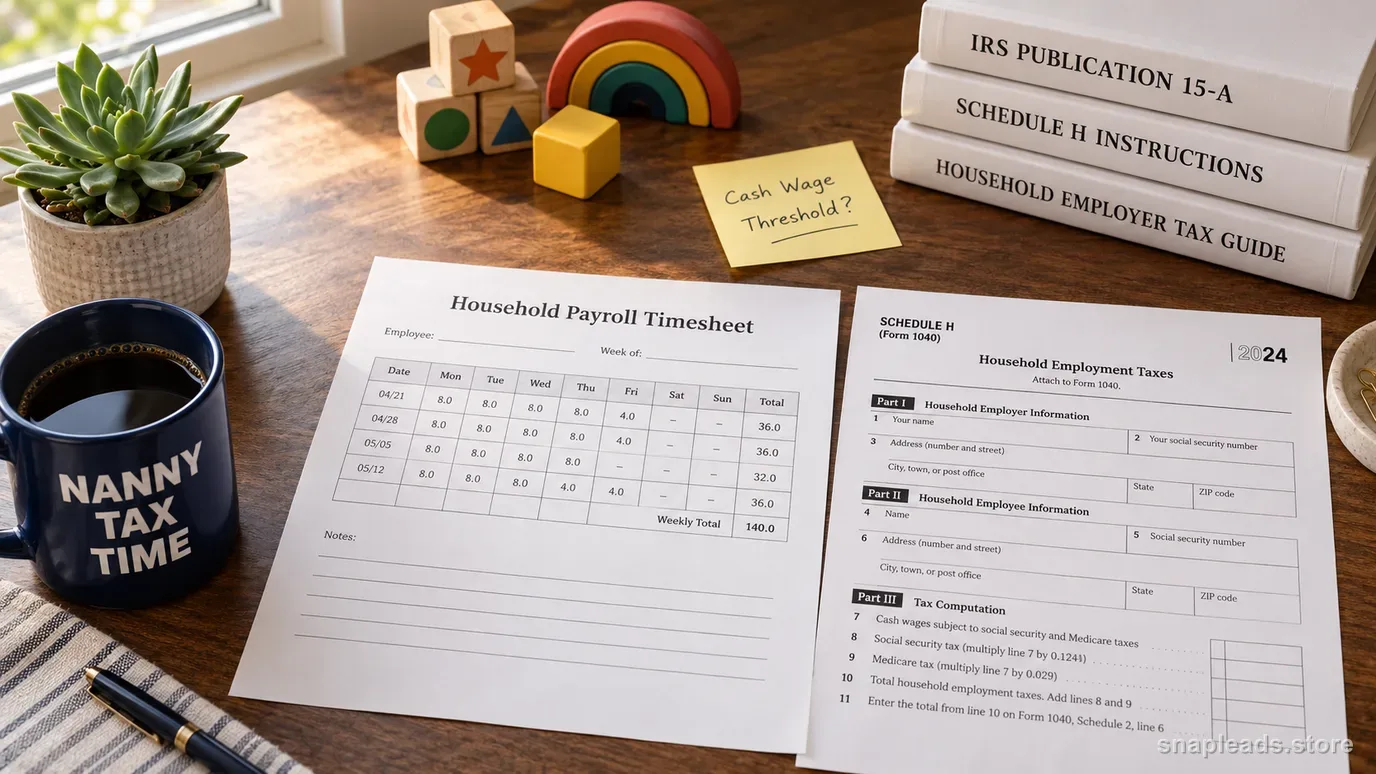 Do I Have to Put My Nanny on Payroll?
 Is a Remote Software Developer a Contractor or Employee?
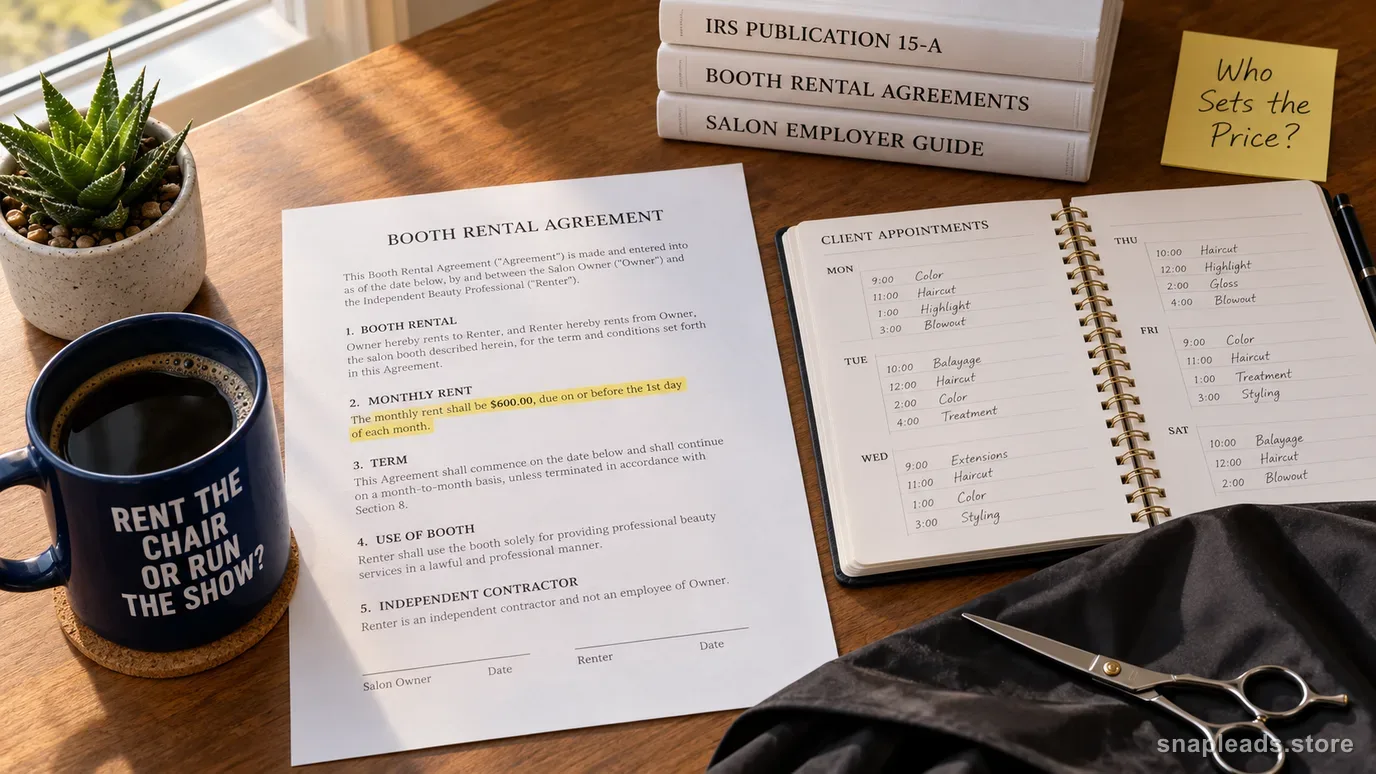 Salon Booth Renter vs. Employee Stylist
 Is a Personal Trainer at a Gym an Employee or Contractor?