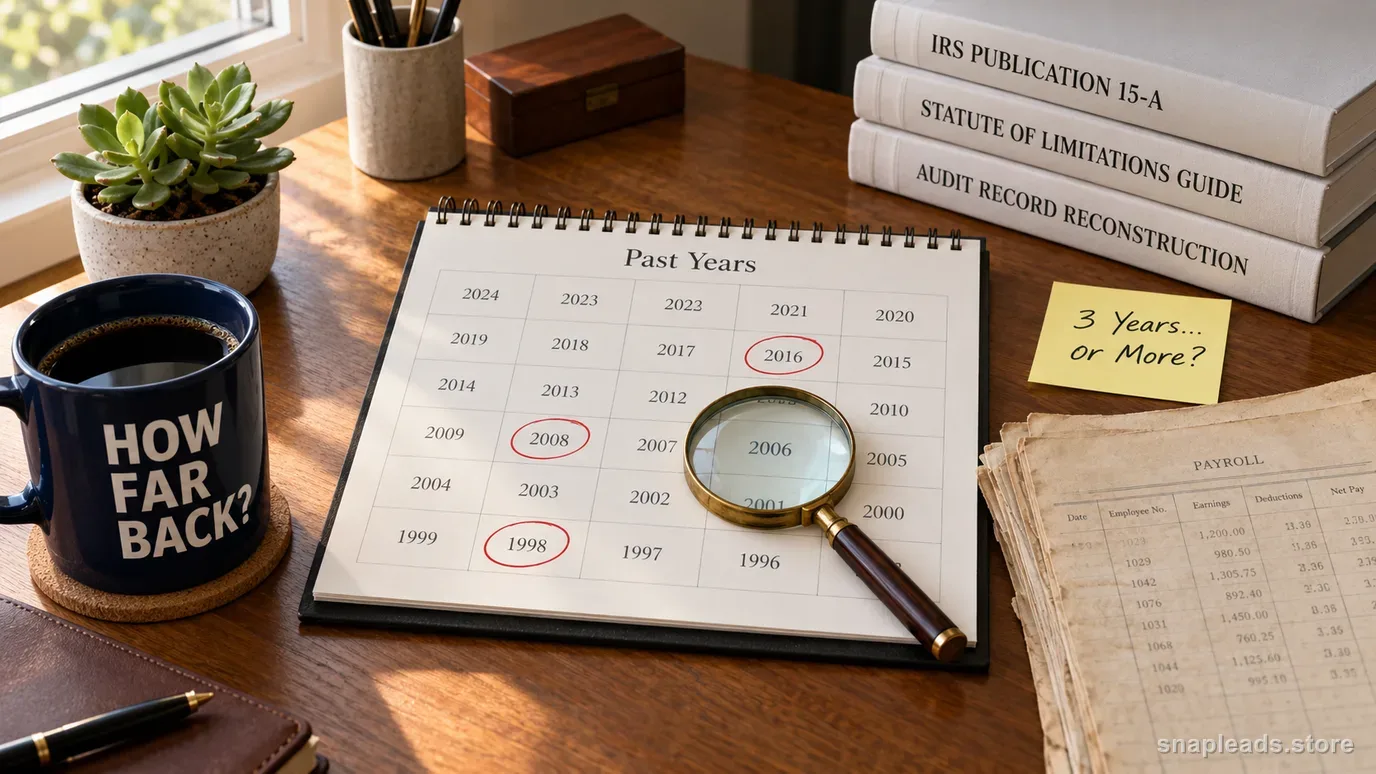
How many years back can the IRS audit worker misclassification?
For federal employment taxes, a common starting point is a three-year assessment period, but the useful answer is not simply “three years back from today.” IRS guidance discussing Social Security and Medicare employment taxes explains that under Internal Revenue Code sections 6501(a) and 6501(b)(2), the assessment period generally runs three years from when the return is deemed filed or when it is actually filed, whichever is later. Timely quarterly employment-tax returns are generally treated as filed on April 15 of the following calendar year for this purpose.
That filing rule can make the audit calendar look different from a simple year count. It also means the business must first identify which Forms 941, 944, 943, or other relevant employment-tax returns were required and when they were filed. Worker classification can be the issue inside an employment-tax examination, but the limitations analysis attaches to the tax return and statutory rules, not to the date the company first used the word “contractor.” This is employer education, not legal or tax advice.
Build the federal lookback from each return, not from the worker's hire date
Suppose a business timely filed all four 2023 Forms 941. For limitations purposes, IRS guidance gives the model that timely employment-tax returns for a calendar year are generally treated as filed on April 15 of the next year. The business should therefore create a return-by-return calendar showing the tax period, original due date, actual filing date, deemed filing date if applicable, and the ordinary assessment-expiration date. This makes it possible to see which periods are still open without guessing.
A worker may have started in 2021 and remained a contractor through 2025, yet the open federal periods depend on the relevant returns and exceptions. Conversely, a recently discovered classification problem does not automatically reopen every year in which the relationship existed. The limitations analysis and the worker-status analysis are separate workstreams, and both should be documented before the company calculates a proposed adjustment.
Missing or late employment-tax returns can change the answer
The ordinary limitations period assumes there is a return to start the clock under the applicable rules. A business that never filed a required employment-tax return should not rely on the normal three-year shorthand. Likewise, a late-filed return may create a later assessment-expiration date because the rule generally looks to the deemed filing date or actual filing date, whichever is later. This is one reason an audit-preparation file should include account transcripts or other reliable filing evidence rather than only copies stored in a local folder.
Do not confuse the fact that Forms 1099 were issued with proof that no employment-tax return was required for the worker population. A business can have filed Forms 941 for other employees while excluding the disputed contractor compensation from wages. In that situation, the limitations analysis is tied to the filed employment-tax returns, but the examination may propose reclassification adjustments within still-open periods.
Fraud and other statutory exceptions require separate analysis
Broad statements such as “the IRS can always go back six years for misclassification” are too loose. Different exceptions in the Internal Revenue Code apply to different situations, and a six-year rule should not be presented as an automatic worker-classification rule. The company should identify the exact statutory exception the examiner is relying on before accepting an expanded federal period. Fraud or a failure to file can have very different consequences from an ordinary classification disagreement.
For an operational audit response, ask for the tax periods under examination in writing and map them to the returns. If the requested records predate the ordinary calendar you built, preserve the request and the stated authority for expansion. Do not destroy older classification records merely because a normal period appears closed; those records may still be relevant to Section 530 consistency, prior treatment, or a state audit with different recordkeeping and limitations rules.
State unemployment lookback periods are not the federal rule
A federal three-year model does not determine a state's unemployment-tax audit period. California's EDD provides a useful example: its published audit process says employment-tax audits generally cover a three-year statutory period consisting of the 12 most recently completed calendar quarters, while also stating that an examination can expand and in some situations extend beyond that period. California audit guidelines further identify circumstances in which different statutory-limitation rules apply.
Other states use their own statutes, tests, and assessment periods. The safest workflow is to keep a separate state tab for each jurisdiction in which affected workers performed services. Record the agency, tax program, ordinary lookback, exceptions, and required retention period from that state's official source. Do not copy California's period into a multistate policy.
What to hand an auditor when the lookback is disputed
Prepare a compact limitations package: filing confirmations for each employment-tax return, transcripts if available, payroll registers, Forms W-2 and 1099, general-ledger payment detail, and a worker roster by tax period. Then add a one-page chronology showing which classification decision was in effect during each period and when any role changed. A clean chronology lets the business separate an open assessment period from older facts that are relevant only as background or Section 530 evidence.
If the business is already under examination, avoid filing corrective returns solely to “start the clock” without understanding the procedural effect. An amended return, a worker reclassification, a settlement program, and an audit response can interact differently with the open examination. Coordinate the federal chronology with any state audit chronology so the same dates and worker populations reconcile across submissions.
Lookback worksheet
Build the limitations calendar return by return
Do not start with a generic 'three years' answer. Build one row for every potentially affected employment-tax return.
| Field | What to record | Why it matters |
|---|---|---|
| Tax period | Quarter and calendar year | Defines the compensation and worker population under review |
| Return | Form 941, 944, 943, or other applicable employment-tax return | The limitations analysis attaches to the relevant return |
| Actual filing date | Verified filing or transcript date | A late return can move the assessment timeline |
| Deemed filing date | Apply the employment-tax deemed-filing rule where applicable | Prevents a simple quarter-end calculation from being wrong |
| Possible exception | No return, fraud, or another specifically asserted statutory exception | Explains why an examiner may seek an expanded period |
| State comparison | Separate state UI lookback and record-retention rule | Federal and state calendars are not interchangeable |
WORKED EXAMPLE
Worked example: a 2022–2025 contractor population
A consulting firm used eight contractors from 2022 through 2025 and timely filed quarterly Forms 941 for its W-2 staff. In September 2026, it receives an IRS employment-tax examination notice that includes worker classification. Instead of assuming that every contractor payment since 2022 is automatically open, the controller builds a calendar for each year's employment-tax returns using actual filing confirmations and the IRS deemed-filing rule.
The firm also keeps the older 2022 records even if a period appears closed because those facts can matter to consistency and reasonable-basis questions. When a state unemployment agency later asks for records, the controller builds a separate state limitations calendar instead of reusing the IRS calculation.
COMMON QUESTIONS
Frequently asked
- Is the worker misclassification audit period always three years?
- No. Three years is a common federal starting point for assessment when returns were filed, but filing dates and statutory exceptions matter. State unemployment agencies have their own rules.
- Does the IRS get six years automatically for worker misclassification?
- Do not assume that. A longer federal period depends on the statutory exception and facts; worker misclassification by itself is not a universal six-year rule.
- What if we never filed Form 941 because we had only contractors?
- A missing required return can materially change the limitations analysis. First determine whether an employment-tax return was legally required for the period rather than assuming the contractor label eliminated the filing obligation.
- How does this relate to an IRS employment-tax examination?
- The examination identifies the periods and worker issues being reviewed. Build a return-by-return chronology and keep it with the examination file. IRS worker-classification examination timeline
- What records should I keep for a state unemployment audit?
- Keep the worker roster, payment ledger, Forms 1099 and W-2, contracts, invoices, and filing records for the period the state requests. State retention and assessment rules vary. Prepare for a state unemployment audit document request
 Statutory Employee vs. Independent Contractor: The Federal Category Small Businesses Often Miss
 How Far Back Does a State Unemployment Audit Go?
 VCSP Eligibility and Timing: When Voluntary Worker Reclassification Is Still Available
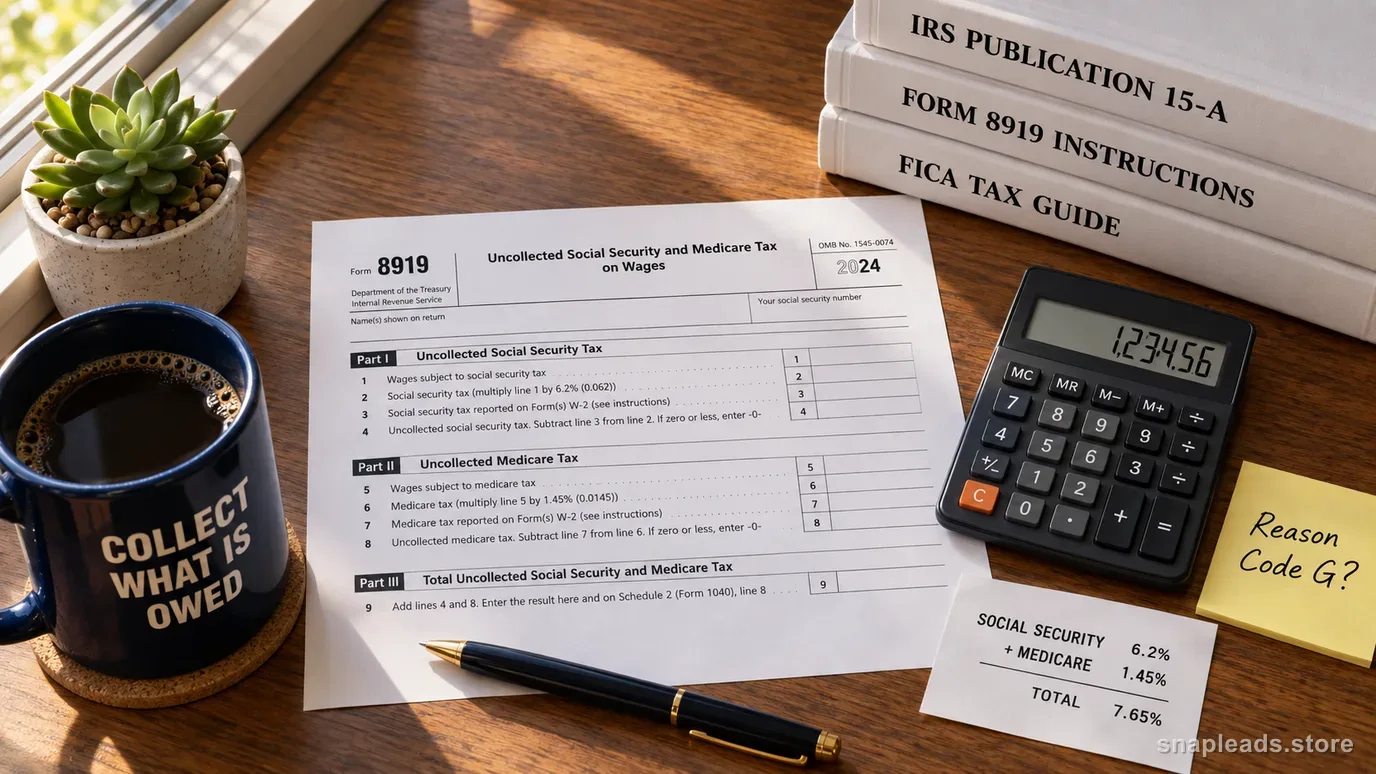 Form 8919: Uncollected Social Security and Medicare Tax
 Preparing 1099 and Accounts-Payable Records for an Unemployment Audit
 How to Prepare Form 8952 for VCSP: Build the Worker Roster, Class Description, Start Date, and Payment Workpaper