
Can an IRS audit trigger a state unemployment audit?
Yes, an IRS audit can create information that becomes useful to a state tax or workforce agency, but there is no rule that every IRS worker-classification examination automatically opens a state unemployment audit. The IRS says its state-partnering program supports joint tax administration with state taxing authorities, including state workforce agencies, and that information exchanged through ongoing initiatives can include audit results, business return information, and employment-tax information.
The legal permission to share is not unlimited. IRS disclosure guidance explains that federal return information is generally protected, while Internal Revenue Code section 6103(d) permits disclosure to state agencies responsible for tax administration when the statutory requirements are met. The practical conclusion is narrower than many SEO articles suggest: data can move through authorized channels, but the timing, recipient, scope, and audit action depend on the program and agency. This is employer education, not legal or tax advice.
California shows how a federal finding can become a state audit lead
California provides unusually clear official evidence of two-way audit coordination. EDD's Employment Tax Audit Process states that EDD employment-tax audit information is made available to the IRS under an exchange agreement and that the IRS may use the information in administering its tax program. That means an employer should not assume an EDD classification file will remain relevant only to California payroll taxes.
The reverse direction also exists. California's current Joint Enforcement Strike Force reporting describes the Questionable Employment Tax Practices program as a collaborative EDD-IRS effort created to exchange case information. The report explains that IRS cases can be audit leads for EDD, including cases involving unreported wages or misclassified workers. This is a concrete California program, not proof that every state follows the same referral procedure.
There is no reliable 'IRS first' or 'state first' rule
A worker-classification problem can surface through many routes: a state unemployment claim, a state payroll audit, an IRS employment-tax examination, a worker filing Form SS-8 or Form 8919, a complaint, or an agency data-match program. The business should therefore avoid building strategy around a predicted sequence. A state claim can arise before any federal contact, while a federal audit result can later become relevant to a state workforce agency.
The right response is to keep one master fact chronology and separate legal analyses. Record the worker population, service dates, compensation, control facts, contracts, Forms W-2 and 1099, work locations, and role changes once. Then create federal-tax and state-specific tabs that apply the correct law. The facts should reconcile even when the legal tests and conclusions differ.
When a new notice arrives, record whether it cites a referral, information exchange, claimant, random selection, or another source if the agency discloses that information. Do not speculate in the response about who 'reported' the company. The source of the lead and the merits of worker classification are separate issues, and the audit should be answered from verified facts rather than assumptions about interagency sequencing.
A federal classification result does not automatically control state UI law
Information sharing and legal preclusion are different concepts. A state may receive federal audit information but still apply its own unemployment statute or worker test. Likewise, an IRS common-law classification analysis does not automatically resolve a state's wage, unemployment, workers' compensation, or industry-specific rule. The agency may use the federal file as evidence or a lead while reaching its own determination under state law.
This distinction should shape written submissions. Do not tell a state auditor that 'the IRS found contractor status, so the state must agree' unless the state's law actually gives that finding controlling effect. Instead, identify the federal result, explain which facts overlap, and then analyze those facts under the state rule. If the state result differs, document why the legal standards produce different outcomes.
Keep parallel audit files consistent without copying legal arguments
Use a common evidence index for facts that should be identical everywhere: payment totals, service dates, worker identity, contract versions, schedules, invoices, work locations, and system records. Then maintain separate issue logs for federal employment tax, state unemployment tax, and any wage-and-hour matter. That structure reduces the risk that the employer sends one worker population to the IRS and a different unexplained population to the state.
If one agency adjusts payment totals or determines that certain periods are outside scope, update the master chronology and note the reason. Do not silently rewrite historical facts to match the latest result. An audit record is stronger when it shows which issue changed and which facts remained constant.
What to do after one agency reclassifies workers
After an IRS or state agency reclassifies a worker population, identify other jurisdictions and programs that could be affected before filing corrections everywhere. Ask which periods are open, which legal tests apply, whether a relief provision is available, and whether the finding has already been shared or is likely to become a lead. A federal Section 530 relief result, for example, can protect the employer from specified federal employment-tax liability without declaring that the workers are independent contractors for state law.
Create a cross-agency action table with the agency, open periods, worker class, factual finding, legal result, information-sharing source, correction decision, and deadline. The goal is not to hide a federal or state result; it is to avoid turning one agency's outcome into an unsupported nationwide conclusion.
Cross-agency map
What to reconcile when IRS and state audits may overlap
Use one fact record and separate legal analyses. Information can be shared even when the legal tests differ.
| Item | Keep common across agencies | Analyze separately |
|---|---|---|
| Worker population | Names, dates, compensation, role versions | Which workers each agency has jurisdiction to review |
| Evidence | Contracts, invoices, schedules, system records | Weight given under each legal test |
| Tax forms | W-2/1099/941 filing history | Federal vs. state reporting consequence |
| Work location | Physical service location by period | State UI and payroll rules |
| Finding | Record exact agency conclusion | Whether conclusion controls, informs, or merely creates a lead |
| Deadlines | Master chronology | Agency-specific protest/correction periods |
WORKED EXAMPLE
Worked example: IRS finding followed by a California audit lead
A California consulting company completes an IRS employment-tax examination involving eight project coordinators. The company agrees with part of the federal adjustment. Six months later, EDD opens a payroll-tax audit and asks about the same worker class. The company does not assume the EDD result is predetermined; it produces the same worker roster and payment chronology, then applies California's state classification rules separately.
The company also preserves the federal closing documents and identifies which federal conclusions concerned tax liability, which concerned worker status, and whether any Section 530 relief applied. That separation lets the business respond consistently without claiming that a federal result automatically settles state unemployment law.
COMMON QUESTIONS
Frequently asked
- Does the IRS share worker-classification audit results with states?
- IRS says authorized state information-sharing programs can include audit results and employment-tax information. The exact exchange depends on statutory authority and program agreements.
- Can a state unemployment audit trigger an IRS audit?
- State audit information can be shared with the IRS under authorized programs and can become a federal lead, but a state audit does not automatically create an IRS examination.
- Does an IRS worker-classification result bind the state?
- Not automatically. States may use different unemployment or employment tests and may reach their own legal conclusion.
- How should I manage two worker-classification audits at once?
- Keep one master factual record and separate federal and state legal issue logs so worker lists and payment totals reconcile. IRS worker-classification examination timeline
- What if a state audit already reclassified contractors?
- Identify the open periods, other affected agencies, and correction or appeal options before assuming the state result should simply be copied elsewhere. After a state audit reclassifies contractors
 What Can Trigger a State Unemployment Tax Worker-Classification Audit?
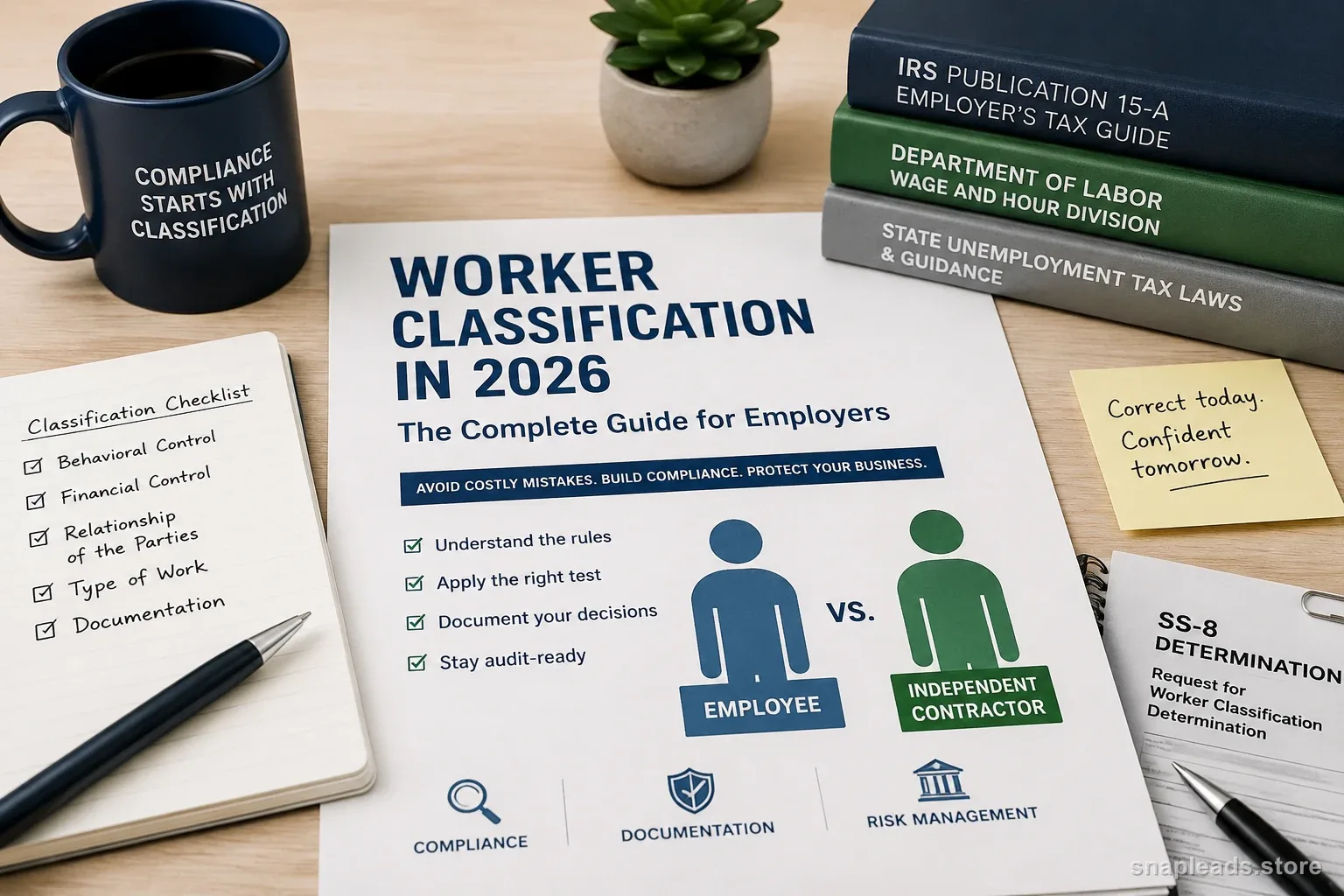 1099 or W-2? Start With the IRS Three-Category Classification Framework
 Nevada UI ABC Test: Why an IRS Contractor Result or Written Agreement Does Not Settle State Coverage
 Can You Be Audited With Only 1099 Contractors?
 What Happens When You Get Audited by Unemployment?
 What Happens After You File Form SS-8?