
How does a nonprofit classify workers as 1099 or W-2?
Tax-exempt organizations still have employment-tax responsibilities. The IRS states that if an exempt organization has employees, it is responsible for federal income-tax withholding and Social Security and Medicare taxes, and some exempt organizations are also responsible for federal unemployment tax. Before deciding how to report a payment, the organization must determine the business relationship with the person performing the services.
For common-law employee versus independent-contractor status, the IRS uses the same basic control-and-independence framework for exempt organizations: behavioral control, financial control, and the type of relationship. A nonprofit label, grant-funded position, part-time schedule, or mission-driven purpose does not by itself change that analysis. This is employer education, not legal or tax advice.
501(c)(3) status does not mean 'no payroll tax'
A common nonprofit error is to hear that 501(c)(3) organizations have a federal unemployment-tax exemption and then generalize that into a broad payroll-tax exemption. IRS guidance states that section 501(c)(3) organizations are exempt from FUTA on qualifying employee services, but employee wages are generally still subject to federal income-tax withholding and Social Security and Medicare rules unless a separate exception applies.
Other tax-exempt organizations may not have the same FUTA treatment. The payroll file should therefore separate three questions: Is the worker an employee? Which employment taxes normally apply to that employee? Does a specific exemption or exclusion apply to this organization or worker? Starting with the exemption can lead the organization to classify the relationship incorrectly.
Mission-critical work is not automatically employment, but ongoing control matters
A nonprofit may legitimately hire outside businesses for audit work, graphic design, legal services, technology implementation, evaluation, fundraising consulting, or other projects. A one-time contractor can perform work that supports the mission while still operating an independent business. The IRS even provides exempt-organization examples contrasting controlled employee work with independently performed project services.
The risk rises when the organization creates a continuing role but routes pay through accounts payable: recurring program hours, supervisor-assigned duties, required staff meetings, organization-provided tools, employee-style policies, no separate client market, and indefinite service. The fact that the worker is paid from a restricted grant or receives a 'stipend' does not answer whether the payment is wages, contractor compensation, or another type of payment.
Volunteers are a separate category from 1099 contractors
A nonprofit should not treat 'volunteer' and 'independent contractor' as interchangeable alternatives to payroll. The Department of Labor's nonprofit fact sheet explains that individuals may volunteer freely for charitable, religious, civic, humanitarian, or similar nonprofit purposes without contemplation or receipt of compensation in appropriate circumstances. Volunteers generally serve part time, do not displace regular employed workers, and paid employees cannot volunteer the same type of services to their nonprofit employer.
Once the organization promises or pays compensation for services, the volunteer analysis can change and the organization should identify the actual legal category instead of using a volunteer label to avoid classification. Expense reimbursements, nominal benefits, stipends, paid program roles, and employee duties can raise different questions. Keep volunteer policies and paid-worker classification files separate.
Common nonprofit roles need fact-specific review
A grant writer hired for a defined proposal package at a negotiated project fee while serving several clients may present a different pattern from a development coordinator who works every weekday under the development director. A program facilitator following the nonprofit's curriculum on a required recurring schedule may look different from an outside consultant designing one training curriculum for a fixed fee. A bookkeeper performing monthly staff duties can differ from an accounting firm providing year-end cleanup.
Corporate officers deserve additional care because federal tax law can treat officers as employees, subject to limited exceptions. Ministers and certain religious workers have specialized rules that are outside this general article. Do not force every nonprofit service relationship into one W-2-versus-1099 template when a statutory category or specialized rule applies.
Board service should also be separated from paid operational work. A person can serve as an unpaid director and later perform compensated services, but the organization should document which capacity produced each payment instead of calling all board-adjacent compensation a stipend. Where an officer performs more than minor services for remuneration, special federal employee rules can apply, so officer compensation should not be routed automatically through 1099 processing.
Use a four-column nonprofit worker register
For every person providing services, record the role, whether compensation is expected, the proposed worker category, and the evidence supporting that category. For paid common-law roles, add schedule, supervision, tools, pricing, other clients, duration, benefits, and contract. For volunteers, document the volunteer program and absence of promised compensation. For officers or specialized religious roles, route the file to the applicable statutory guidance.
Review the register at grant renewal, budget changes, or when a volunteer begins receiving regular pay. Nonprofits often evolve informally: a volunteer coordinator becomes a paid program manager, a project consultant becomes permanent staff, or a board officer begins performing compensated operational work. Classification should change when the facts change.
The register should also capture the funding source without letting the funding source dictate status. Federal grants, foundation grants, membership dues, or unrestricted donations can finance either employees or bona fide contractors. Classification follows the service relationship; the budget code merely explains where the organization obtained the money.
Nonprofit worker routing table
Classify the relationship before applying nonprofit tax exceptions
Separate worker status from the organization's tax-exempt status. The exemption question comes after the relationship question.
| Relationship | Core question | Next record |
|---|---|---|
| Common-law employee | Does the nonprofit have the right to control what and how services are performed? | Payroll, W-4/W-2, FICA and applicable state file |
| Independent contractor | Is the nonprofit buying a result from a genuinely independent business? | Scope, W-9, invoices, business-independence evidence |
| Volunteer | Are services freely donated for charitable/public purposes without contemplated compensation? | Volunteer policy and service record |
| 501(c)(3) employee | After employee status, does the FUTA exemption apply? | 501(c)(3) status plus payroll-tax worksheet |
| Special statutory/religious role | Does a specific federal rule override the general path? | Route to the applicable statutory guidance |
WORKED EXAMPLE
Worked example: grant-funded program facilitator
River Health, a 501(c)(3), receives a grant to run weekly nutrition workshops. It pays Morgan $900 per month, requires Morgan to use the nonprofit's curriculum, work Tuesday and Thursday evenings at assigned sites, attend staff training, submit weekly reports to the program director, and follow employee conduct policies. Morgan has no separate training business. The grant and the word 'stipend' do not decide classification; River Health reviews the controlled ongoing role as a worker-status question.
The nonprofit separately hires BrightPath Evaluation LLC for $8,500 to design an independent outcomes study, choose its methodology within agreed deliverables, and deliver a final report. BrightPath serves multiple organizations and bears its own project costs. River Health documents the two relationships separately and then applies the correct nonprofit employment-tax rules only after deciding worker status.
COMMON QUESTIONS
Frequently asked
- Are nonprofit workers exempt from payroll taxes?
- No broad exemption applies just because the employer is a nonprofit. Employee wages generally remain subject to federal withholding and FICA rules, while qualifying 501(c)(3) organizations have a specific FUTA exemption.
- Can a nonprofit pay a worker a stipend instead of putting them on payroll?
- Calling compensation a stipend does not decide worker status. Review what services are required and the actual relationship.
- Can nonprofits hire independent contractors?
- Yes. A nonprofit can purchase services from a genuine independent business, but tax-exempt status does not lower the classification standard. IRS employee vs. independent contractor framework
- Can a paid nonprofit employee also volunteer?
- DOL guidance says paid employees generally cannot volunteer the same type of services to their nonprofit employer. Different bona fide volunteer services require a separate analysis.
- Should a nonprofit use Form SS-8 when status is unclear?
- A firm or worker may request an IRS federal employment-tax determination when common-law status remains uncertain. When to file Form SS-8
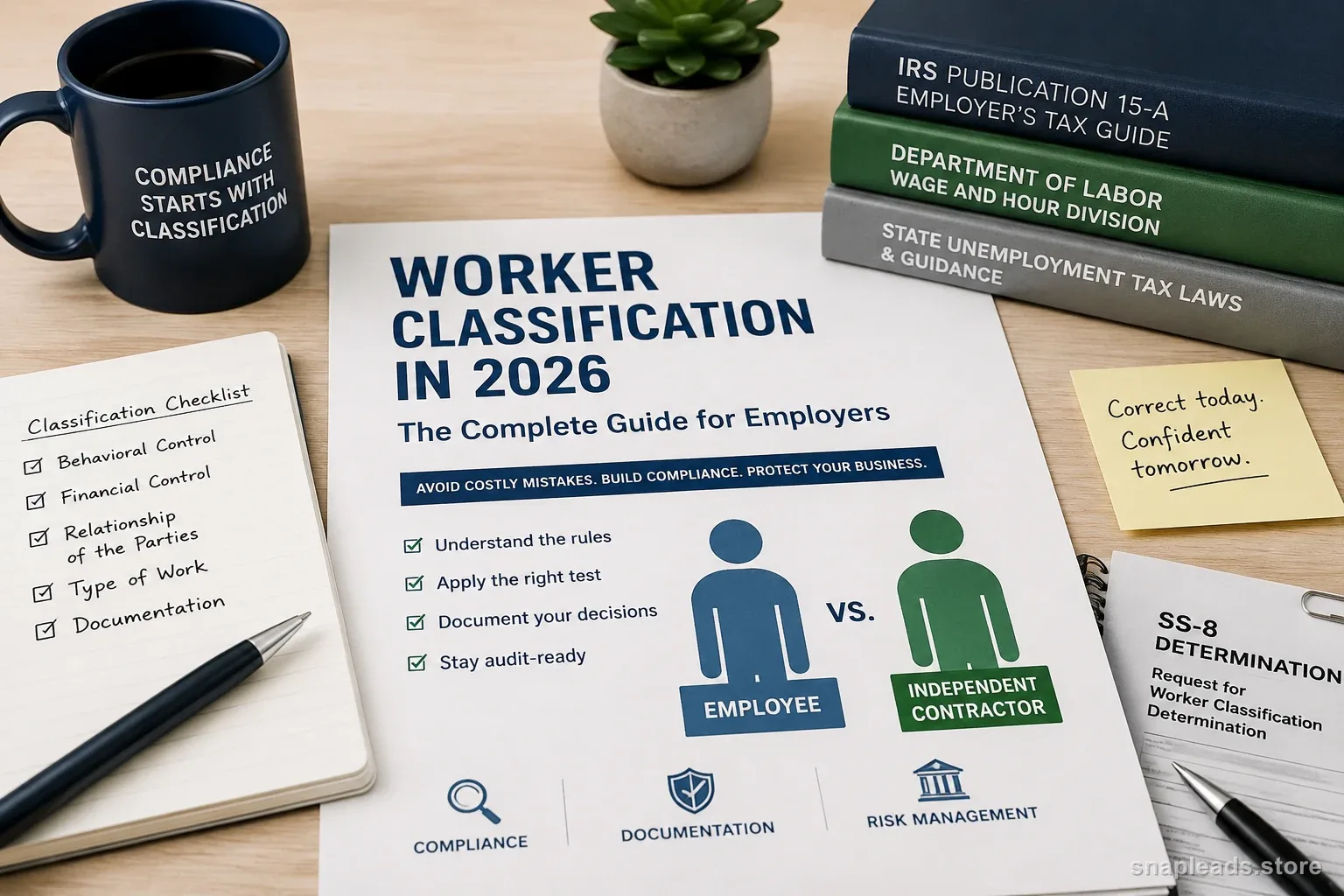 1099 or W-2? Start With the IRS Three-Category Classification Framework
 Missouri UI Worker Classification: Use the 20 Factors as Evidence—Then Check Statutory Employee and Exempt Categories
 Can You Be Audited With Only 1099 Contractors?
 Part-Time Does Not Mean 1099: How to Classify a Worker With Limited Hours
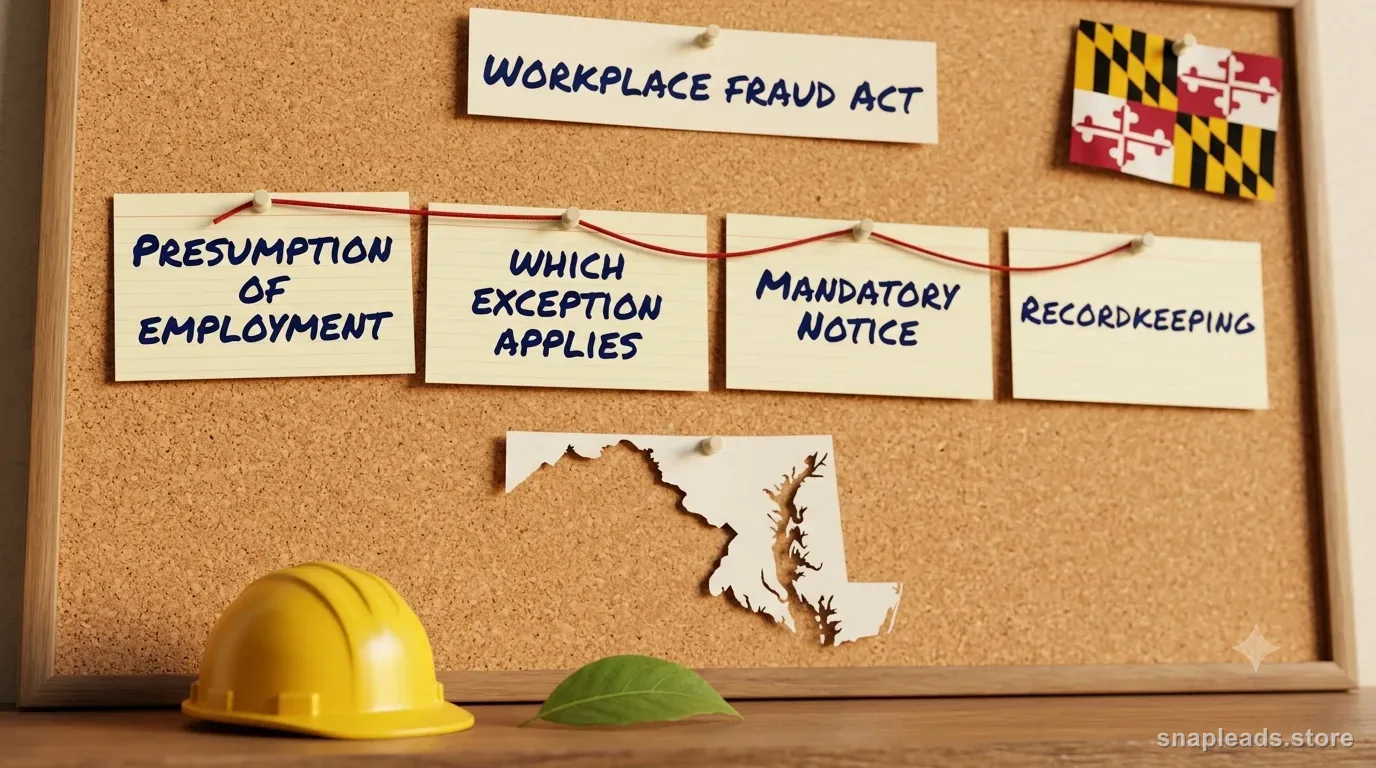 Maryland Workplace Fraud Act: The Contractor File Construction and Landscaping Businesses Must Keep
 Is a Remote Software Developer a Contractor or Employee?